
Aged Care Laundry Water Recycling Australia
Save 45–65% on laundry water use and around 15% on gas, with payback as fast as 6 months at 100 tonnes/week.
Use your laundry’s linen volumes, utility bills and care requirements to see what recycling could save.
Australian aged-care laundry planning
Start with the laundry operator and the care team
LaundryWaterSolutions connects commercial laundries with a company that works with Wientjens. An aged-care assessment starts by identifying the actual laundry, its workload and the people responsible for linen quality, infection prevention and continuity.
Review how recycling fits into the wash process with those teams. The retrofit installation guide covers connections and commissioning; the cost and payback guide helps prepare bills and production records.
For outsourced linen, involve the contracted plant before attributing its utility savings to your facility. Its operator can also use the textile-rental laundry guide. Where healthcare streams are shared, discuss the hospital process-validation questions with the responsible teams.
Page revised .
- Savings: 45–65% less laundry water and around 15% less gas.
- Payback: As fast as 6 months for laundries processing 100 tonnes/week.
- How we help: We connect you with our partner, who works with Wientjens.
Keep linen quality and hygiene at the centre
Water recycling should fit your laundry’s wash process and care requirements. Work with your laundry and infection-control teams to confirm suitable reuse stages and test the process before putting it into everyday use.
Key Benefits
Why Major Australian Aged Care Providers Choose Water Recycling
Lower laundry costs and practical operation, with resident care at the centre.
Budget Optimisation
Cut laundry water use by 45–65% and gas use by around 15%. Put the savings towards resident care, staffing or facility improvements where they’re needed most.
Care and Linen Quality
Keep resident comfort and hygiene at the heart of your laundry. Plan reuse around your wash process, with linen trials to check cleanliness, appearance and fabric feel.
Options for Different Laundry Sizes
Blue Ocean Compact serves smaller and on-site laundries, while Blue Ocean Filter serves larger operations. Choose the model and capacity that fit your laundry’s workload and available space.
Automated Operation
Automatic controls manage day-to-day water recycling, helping your team run the system alongside its existing laundry routines.
Simple Maintenance
Blue Ocean is designed for low-maintenance operation. Agree a cleaning and servicing schedule with the supplier so your team knows what to do and when.
Clear Payback Potential
Payback can be as fast as 6 months at 100 tonnes/week. A free ROI assessment shows how your laundry’s workload, bills and operating costs affect its return.
Model options, automatic controls and maintenance: Wientjens Blue Ocean product guide.
ROI Breakdown
Water Reduction and Payback by Facility Size
Explore the savings for your facility, with a free ROI analysis tailored to your laundry.
- Less laundry water
- 45–65%
- Less gas
- Around 15%
Small Facility
60–80 beds
Make the most of limited plant-room space. Match equipment and installation costs to the amount of linen your facility washes each day.
Mid-Size Facility
Around 120 beds
Plan around regular daily linen loads and busier periods. Use your laundry’s water and gas bills to assess the savings and payback.
Large Facility
180–200 beds
Match recycling capacity to peak demand across your washers. Plan installation with your laundry and care teams to minimise disruption to linen supply.
For laundries processing 100 tonnes/week, payback can be as fast as 6 months. Your own payback depends on how much linen you wash, your utility bills and the cost of installing and running the system.
Find out what your facility could save
Get a free ROI analysis based on your laundry’s volume, water and gas bills, and installation needs.
Installation Example
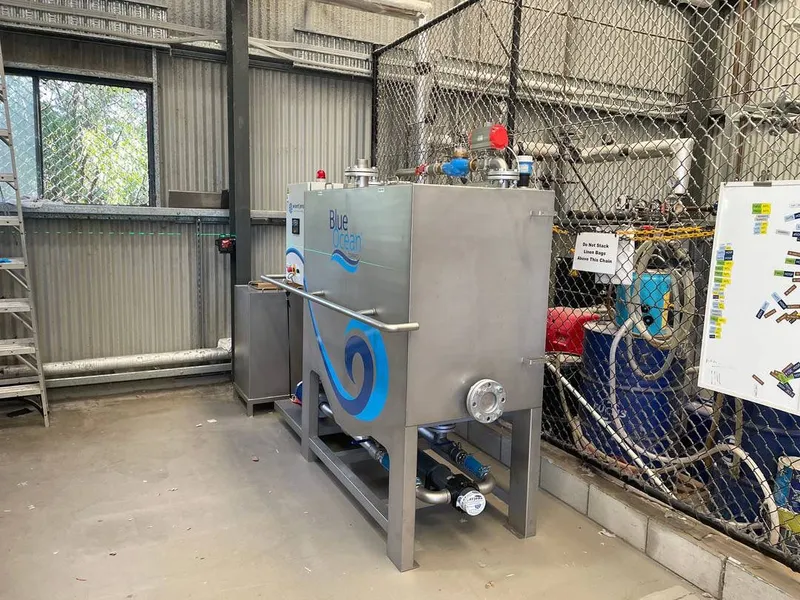
Blue Ocean Compact in Action
This Blue Ocean Compact system was installed by our partner in a working commercial laundry.
Our partner works with Wientjens. We’ll connect you with them to explore a water-recycling setup that fits your laundry’s space, workload and existing washers.
Local utility and site questions
Use the authority and charges on your own account
Use the Australian utility and trade-waste directory to identify the relevant provider. Ask how proposed discharge changes affect approval conditions, sampling, pretreatment and billing. Include connection and maintenance access in the installed scope.
The Sydney, Melbourne, Brisbane, Perth and Adelaide guides help prepare local site questions. For regional commercial properties, check local water and sewerage providers for the charges and service conditions that apply to your site.
FAQ
Australian Aged Care Laundry Water Recycling FAQ
How much can Australian aged-care laundries save?
Water recycling can cut your laundry’s water use by 45–65% and gas use by around 15%. For laundries processing 100 tonnes/week, payback can be as fast as 6 months. Use measured laundry water use, relevant gas use, eligible reuse streams and actual utility charges to assess the benefit. Include additional operating, testing and maintenance costs before calculating net annual savings. Bed count alone does not establish throughput or payback.
Does installing water recycling establish aged-care compliance?
Equipment selection does not establish conformance with the strengthened Aged Care Quality Standards or approve a laundry process. The strengthened framework applied from 1 November 2025; Standard 4 covers the environment and infection prevention and control. Review AS 4146:2024, which superseded AS/NZS 4146:2000 in Australia, together with applicable contracts, facility policies and jurisdictional requirements. The care provider’s responsible laundry, infection-control and engineering teams should approve the proposed process and acceptance evidence.
What if the facility outsources its linen or shares a central laundry?
Identify where washing occurs, who owns the equipment and who pays the utilities. For outsourced linen, involve the laundry operator and review the service contract before assigning any saving to the facility. For a central laundry, collect its total kilograms processed and separate each site’s linen-service costs from the plant’s water and gas costs. A plant saving does not automatically change an individual facility’s utility bill or contract price.
Can every aged-care linen stream use recovered water?
Assess streams individually. Map resident bedding, towels, personal clothing, staff uniforms and dining linen with their soiling, chemicals and wash recipes. The responsible teams should define accepted collection and reuse points, excluded water and separation requirements. Give linen subject to additional infection precautions, outbreak procedures or chemical contamination an explicit assessment. Filtration specifications alone do not validate disinfection or approve reuse for every item.
How should resident linen quality and comfort be checked?
Agree representative trials with the laundry operator, chemical supplier, linen supplier and care team as relevant. Include the fabrics, colours, soiling and wash recipes actually used. Set acceptance criteria for cleanliness, appearance, odour and fabric feel alongside the required hygiene evidence. Retain personal-clothing identification and return arrangements. Confirm accepted streams and settings before routine reuse.
What should happen during an outbreak, fault or service shutdown?
Use the facility’s infection-control and outbreak procedures to decide whether reuse must change or stop. Agree isolation, fresh-water capacity, alarm escalation and restart criteria for the selected design. Plan reserve linen or an alternative laundry service where needed, and test the contingency during commissioning. Confirm service coverage and response arrangements in writing; automatic control does not guarantee continuous linen supply.
How should an aged-care provider calculate payback?
Start with actual linen kilograms, water and gas records, the approved reuse scope and current account charges. Calculate avoided variable costs less additional electricity, servicing, consumables, testing and staff tasks. Simple payback in years is the installed quotation divided by positive net annual savings, using a consistent GST basis. Payback can be as fast as 6 months at 100 tonnes/week. Use your own laundry’s workload and costs to calculate its return.
Will staff procedures or training need to change?
Review responsibilities for new collection lines, storage, controls, alarms, sampling, cleaning and maintenance before commissioning. Have staff demonstrate normal operation, safe isolation, escalation and restart. Agree who records meter readings and quality results, who reviews exceptions and who authorises any expansion of reuse. Keep the facility’s approved wash and disinfection requirements unless the responsible teams approve a change.

Cut Laundry Water Use 45–65%: Assess Your Aged-Care Facility
Bring your laundry’s production records, bills and care-process requirements to a free ROI assessment.
Use the assessment to define the equipment, cost, validation and continuity questions for your responsible teams.
Explore commercial laundry water recycling in Australia
Wientjens Technology 🇳🇱
DUTCH ENGINEERING
Explore Wientjens Blue Ocean technology. Review the manufacturer's model specifications when assessing your laundry's water and energy recycling options.