
How Commercial Laundry Water Recycling Works
Wientjens water recycling delivers provider-verified reductions of 45–65% in water use and around 15% in gas use. At 100 tonnes per week, payback can be as fast as 6 months.
The Australian assessment
Start with your wash process and measured demand
A weekly tonnage alone cannot define the available reuse water. Identify the collection and receiving wash stages, then measure how their flows and temperatures change during a shift.
Collection and demand
Record drain volumes, peak washer fills and their timing. Include low-production periods and rejected streams in a proposed water balance.
Quality and approvals
Define intended reuse quality and wash acceptance criteria. Check changes to final discharge with the responsible utility; use the Australian approvals guide to prepare those questions.
Energy and bills
Use the provider-verified 45–65% water-use reduction and around 15% gas-use reduction in your assessment. Track recovered-water temperature and the heating it replaces, then compare actual bill components and operating costs using the cost-assessment guide.
For laundries processing 100 tonnes per week, payback can be as fast as 6 months. Calculate your project’s return from the installed cost and positive net annual savings, using the accepted reuse scope and actual utility account.
Page revised .
Product Range
Compare the equipment’s intended function
These are manufacturer-described functions. Product pages and catalogues may describe different model ratings; obtain current drawings and a proposal for your measured duty before selecting equipment.
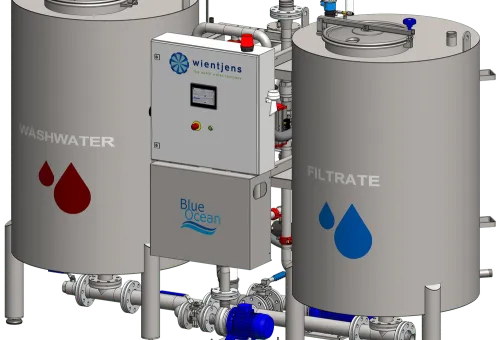
Blue Ocean
Process-water filtration and warm-water reuse, with insulated process-water and filtrate buffers.
Ask for the selected duty, tank volumes and washer connections.
Manufacturer specifications for Blue Ocean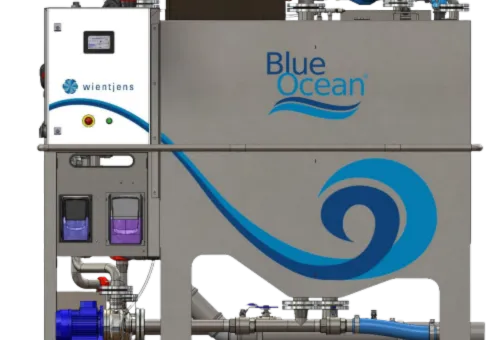
Blue Ocean Compact
Compact configuration in the Blue Ocean range.
Confirm usable output and storage against your drain and fill profile.
Manufacturer specifications for Blue Ocean Compact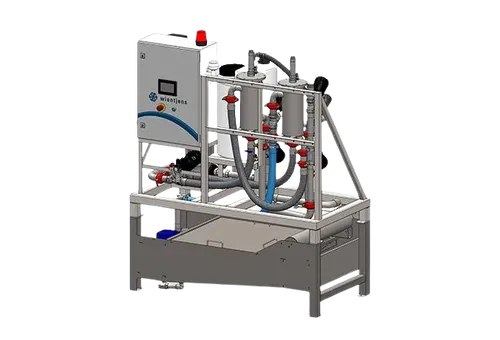
AquaMiser
Process-water recycling for a stable workflow, with buffering options.
Confirm the quoted model’s flow, temperature and connection requirements.
Manufacturer specifications for AquaMiser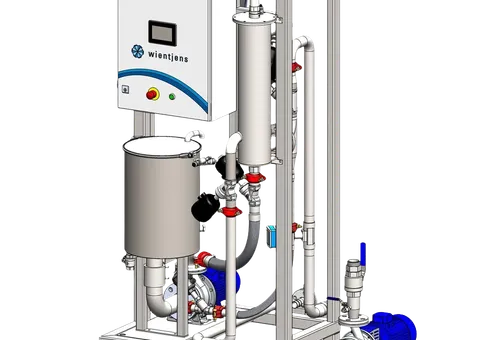
AquaBatch 3
Inline solids filtration for a tunnel washer’s main-wash or rinse compartment.
Define the selected compartment and verify representative wash quality.
Manufacturer specifications for AquaBatch 3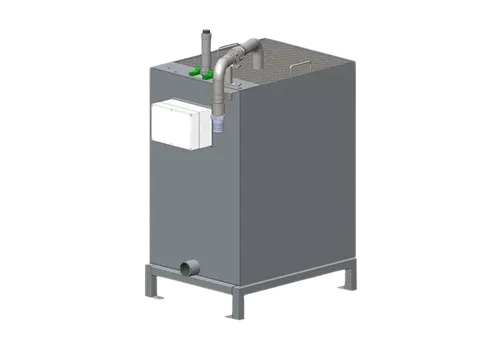
AquaDrain
Filtration of process discharge or backflush water to separate solids.
Specify bag access, solids disposal and the remaining discharge path.
Manufacturer specifications for AquaDrainWarm-water reuse and heat exchange are different functions
Direct reuse retains heat in recovered process water. A specified heat exchanger transfers heat from discharge water to fresh water; Wientjens describes this separate function in its Blue Ocean HEX specifications. Ask which equipment, piping and monitoring the proposed scope includes.
How It Works
5-Step Process Assessment
Identify the proposed water loop and the checks needed before accepting it.
Map collection
Identify eligible wash streams, temperatures, chemicals and drain timing. Keep excluded streams on their agreed disposal path.
Filter selected water
Choose the filtration equipment for the measured stream and required reuse quality. Specify how captured solids and backflush water will be handled.
Buffer warm filtrate
Balance usable collected water against washer demand. Size storage and controls for peak fills, temperature losses and low-flow periods.
Return to selected stages
Confirm the receiving wash stages, supply pressure, controls and fresh-water contingency with the washer and process design team.
Verify operation
Commission against agreed wash-quality, flow and temperature checks. Meter fresh and reused water, and record production and maintenance.
Compatibility
Verify the connections and fallback plan
Record each washer’s make, model, inlets, operating pressure, drain routing and controller interface. Check fresh-water top-up, isolation and fault recovery against the proposed tank and pump arrangement. Demonstrate peak fills, low tank levels, loss of power and service shutdown during commissioning.
Turn these checks into a defined scope using the retrofit and commissioning guide. Agree interruption windows and responsibilities before work begins.
Manufacturer case example
Vanguard Laundry in Toowoomba
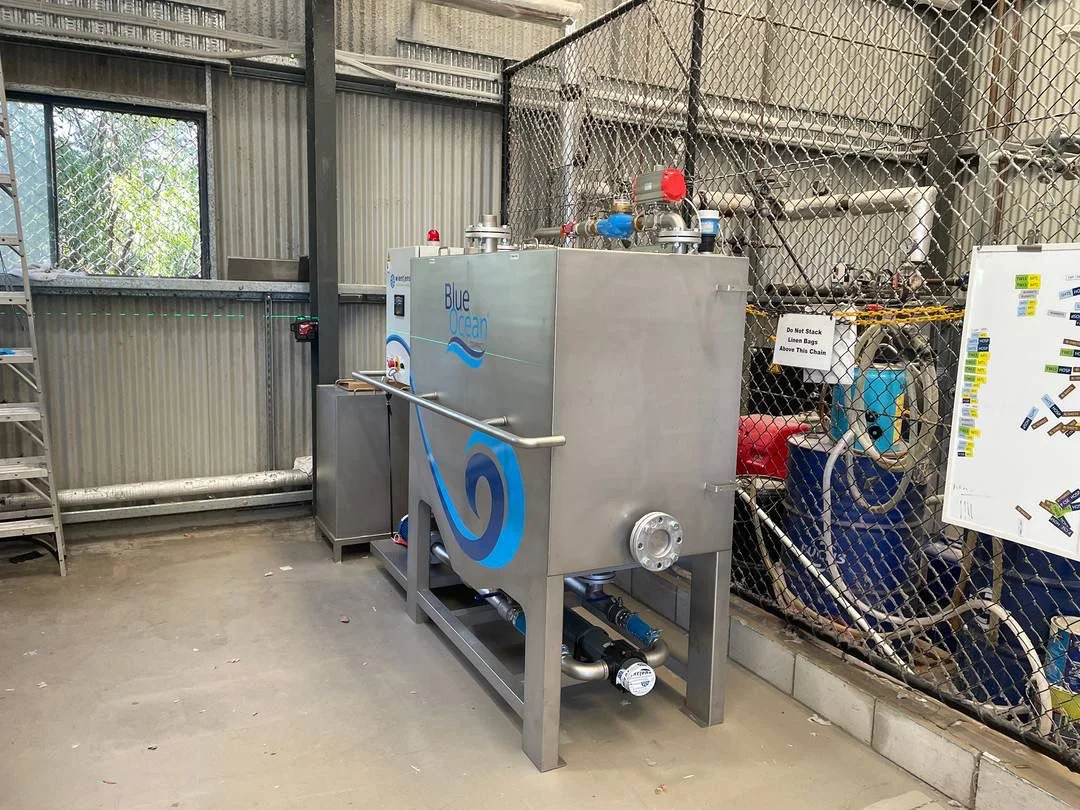
Wientjens reports Blue Ocean Compact and AquaDrain at Vanguard Laundry, with approximately 55–60% process-water savings after commissioning. Its published Vanguard case describes the plant and operating conditions. This is a manufacturer-reported, facility-specific example; assess your own proposed water balance and wash quality.
Suitability Guide
Define reuse quality and measure the result
Wash streams and quality
Record the linen mix, chemicals, colour-transfer risk and soiling in each collection stream. Identify excluded or diverted water and the receiving wash stages. Agree acceptance criteria and representative wash trials with the laundry process team.
For hotel laundries, account for occupancy and linen mix. For hospital and aged-care laundries, involve the responsible care and infection-control teams. A filtration unit does not establish healthcare wash-process compliance.
Meters, temperatures and maintenance
Compare representative periods before and after commissioning. Record fresh-water use per kilogram of linen, reused volume, production mix, temperatures, rejected water, backflush and operating inputs. Document meter locations and what each reported total includes.
For textile-rental plants, include multiple washer streams and simultaneous fills. Use the agreed baseline to evaluate the proposal; reductions in discharge volume do not automatically establish compliant pollutant concentrations or lower every bill component.
Frequently Asked Questions
Questions to resolve before selecting a recycling process
How quickly is recycled water available?
Availability depends on collection flow, filtration capacity, storage and washer demand. Compare each washer’s drain and fill timing, then test peak fills and low tank levels during commissioning. Continuous operation alone does not guarantee an uninterrupted supply.
How do we check linen quality?
Agree the permitted reuse stages and acceptance criteria with your laundry process and chemical team. Compare representative loads, wash results and required hygiene controls before accepting a process change. Filtration alone does not validate a healthcare wash process.
How much water can our laundry save?
Our connected provider has verified water-use reductions of 45–65% with Wientjens water recycling. Measure eligible collection streams and the demand that can use them to apply this range to your laundry. Account for rejected streams, backflush, storage losses and fresh-water requirements in the proposed water balance.
How much gas can water recycling save?
Our connected provider has verified gas-use reductions of around 15%. Reusing warm process water retains heat; a specified heat exchanger can also transfer heat from discharge water to fresh water. Confirm the proposed equipment and measure the gas use it replaces within the laundry’s heating boundary.
How quickly can the investment pay back?
Payback can be as fast as 6 months for a laundry processing 100 tonnes per week. Use the installed quote, actual utility charges and expected reuse volumes to calculate your site’s net annual savings, including additional electricity, maintenance, consumables and testing. Simple payback is installed capital cost divided by positive net annual savings.
What happens during a fault or service shutdown?
Specify the fresh-water fallback, isolation valves, alarm response and restart procedure in the design. Demonstrate them during commissioning, including loss of power or low tank level. Agree any production interruption and service response in writing.
How much space is needed?
Obtain the selected equipment and tank drawings. Include maintenance access, tank height, pipework, electrical access, floor loads and delivery clearances. A published equipment footprint is not the full installed area.
How should we compare recycling technologies?
Compare suitable feed streams, treatment capability, usable flow at peak demand, thermal performance, operating inputs and maintenance. Ask for a proposed water balance and commissioning tests. Evaluate any heat exchanger separately from direct reuse of warm filtrate.

Free Assessment
See how it works for your facility
Request a free assessment using your wash volumes, bills and site information. Identify the measurements and design questions needed to evaluate a recycling proposal.
Explore commercial laundry water recycling in Australia
Wientjens Technology 🇳🇱
DUTCH ENGINEERING
Explore Wientjens Blue Ocean technology. Review the manufacturer's model specifications when assessing your laundry's water and energy recycling options.