
Installation Process in Australia: Retrofit to Existing Equipment
Retrofit for provider-verified reductions of 45–65% in water use and around 15% in gas use. At 100 tonnes per week, payback can be as fast as 6 months. Plan the connections, commissioning and handover for your site.
Australian installation planning
Define the installed scope before setting dates
A retrofit proposal needs to show how selected wash streams reach the equipment and return to suitable wash stages. Establish the required treatment, tank arrangement, controls and changes to the existing services before agreeing an installation schedule.
Start with the process and stream-selection guide. Prepare bills and production records using the cost-assessment guide, and identify approval questions with the Australian regulations guide.
Ask each supplier to separate equipment supply, installation work and optional services. List tanks, pumps, controls, pipework, electrical work, civil changes, delivery, approvals, testing, training and handover as included, excluded or supplied by others.
Use the provider-verified 45–65% water-use reduction and around 15% gas-use reduction when assessing the proposed return. Payback can be as fast as 6 months at 100 tonnes per week; calculate your site’s result from the installed quote and positive net annual savings after recurring operating costs.
For hospital laundries and aged-care laundries, involve the responsible care and infection-control teams in wash-quality acceptance and continuity planning.
Page revised .
Installing in Australia
Confirm the local approval and connection requirements
Identify the premises’ responsible utility, building operator and appropriately qualified design and installation contractors. Confirm the requirements for the actual works; product selection alone does not establish approval or compliance.
Plumbing and backflow scope
Ask the design team to specify potable and recovered-water separation, required backflow protection, isolation, labelling, test points and any state-specific sign-off for the proposed connections.
Utility and discharge review
Provide the current approval, proposed flow diagram and expected discharge changes to the responsible utility. Confirm whether an amendment, pretreatment or sampling is required. Lower discharge volume does not automatically meet concentration limits.
Permitted wash stages
Specify which water is collected, which wash stages may receive it and where excluded streams go. Agree fresh-water requirements and quality acceptance with the laundry process team.
Step by Step
Installation Stages and Acceptance Checks
Agree a site-specific schedule after scope, delivery and approval requirements are known. These stages describe the work and decisions rather than a fixed number of weeks.
Define the design and responsibilities
Map eligible collection streams and receiving wash stages. Confirm the water balance, washer interfaces, reuse quality, discharge path, local approval questions and the responsible parties before accepting a design.
- Collect washer models, drain and fill timing, wash recipes, production and utility records.
- Identify who confirms the design, approval scope, quality criteria and quoted inclusions.
- Obtain selected equipment drawings, storage volumes, operating duty and connection requirements.
Prepare the site and agree the cutover
Confirm access, services and equipment positioning, then agree the isolation and connection sequence. Schedule any interruption around the approved production plan.
- Check delivery routes, tank loads, floor drainage, service clearances and electrical access.
- Document collection, return, rejected-water and fresh-water connections, with required backflow and isolation provisions.
- Agree who performs the work, interruption windows, temporary supply and recovery steps.
Commission against agreed acceptance tests
Verify the installed piping, controls, meter readings and quality criteria before accepting operation. Test the proposed arrangement during representative production and fault conditions.
- Record pressure, flow, temperatures, tank levels and simultaneous washer fills.
- Test low storage, loss of power, isolation, alarms, fresh-water fallback and restart.
- Compare representative wash results and applicable discharge tests with the agreed criteria.
- Record fresh and reused water, production and operating inputs against a documented baseline.
Complete handover and maintenance planning
Define how operators will run, isolate, inspect and maintain the installation. Obtain the records and agreed service terms needed to manage the system after acceptance.
- Receive as-built diagrams, settings, manuals, test results and meter definitions.
- Have operators demonstrate startup, shutdown, alarm response, isolation and solids handling.
- Agree inspection and cleaning tasks, consumables, spares, service contacts and response arrangements.
- Record warranty scope, exclusions and responsibilities in the supplier’s written terms.
Space Planning
Use Current Model Drawings and the Full Installed Layout
Manufacturer-described functions below help define the requested scope. Confirm current model ratings with the supplier; catalogue summaries and product pages may differ.
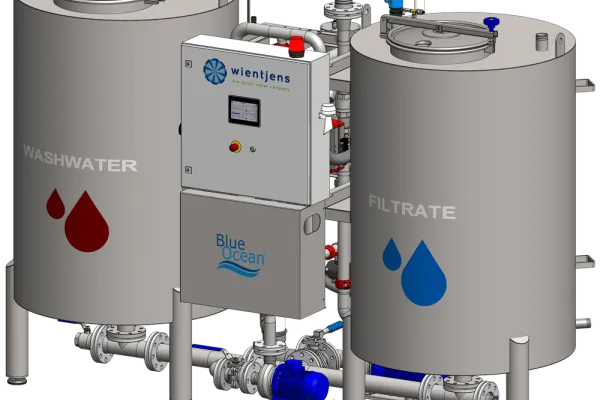
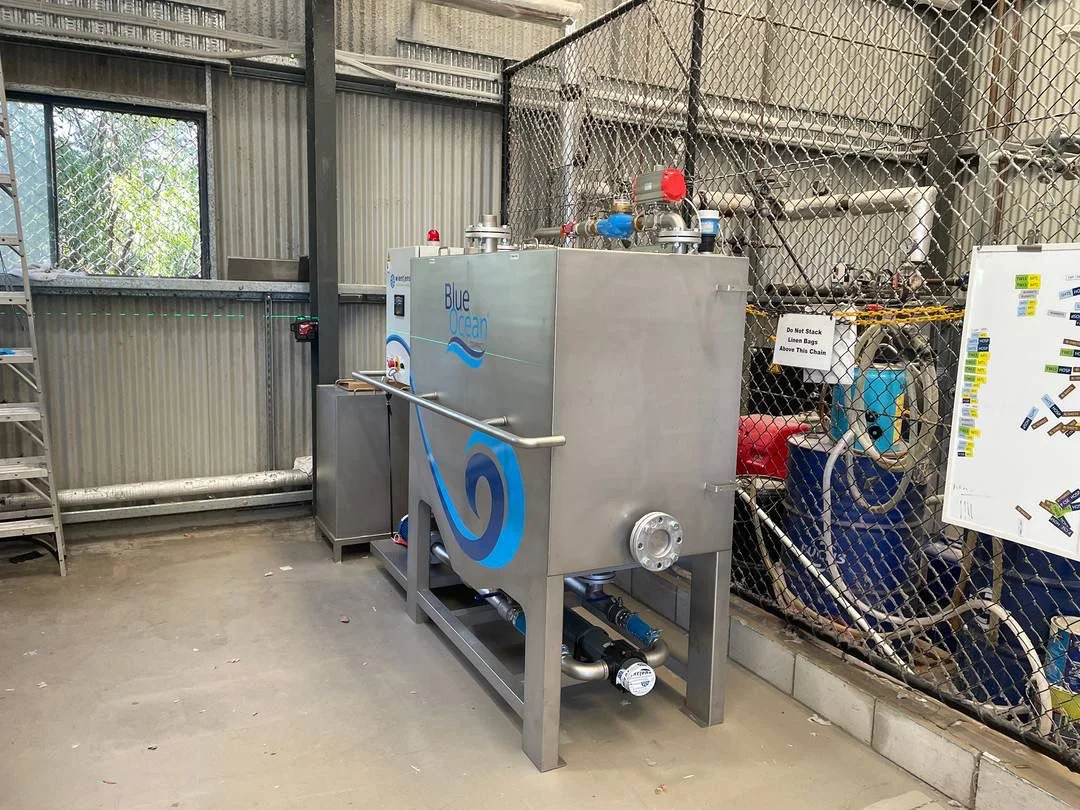
Blue Ocean
Process-water filtration, warm-water reuse and insulated buffering.
Obtain the chosen model’s layout, storage volumes, usable flow and pipe connections.
Manufacturer specifications for Blue Ocean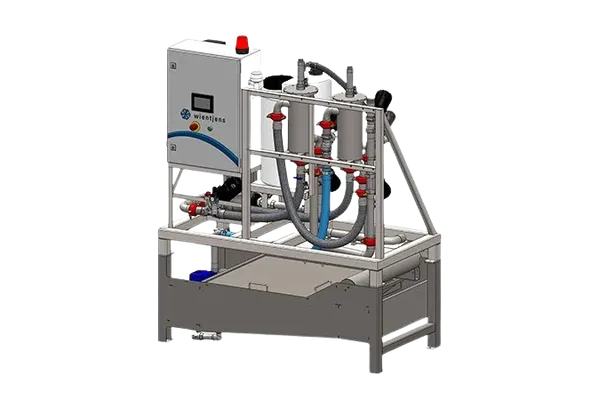
AquaMiser
Process-water recycling for a stable workflow, with buffering options.
Confirm the selected duty, storage arrangement and service access.
Manufacturer specifications for AquaMiser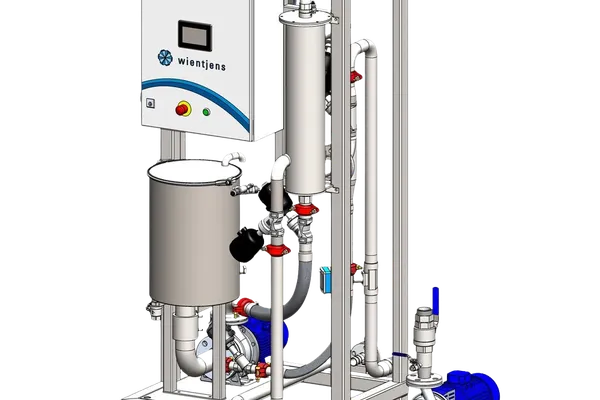
AquaBatch 3
Inline filtration in a tunnel washer’s main-wash or rinse compartment.
Specify the compartment, control interface and wash-quality acceptance tests.
Manufacturer specifications for AquaBatch 3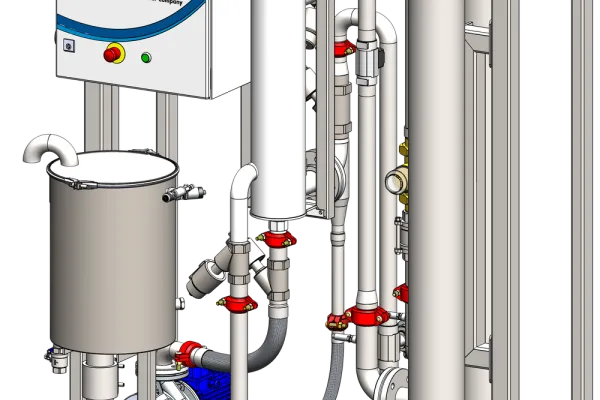
Blue Ocean HEX
Heat transfer from filtered discharge water to fresh wash water.
Define the exchanger, hot-water connections and temperature/flow monitoring separately from the reuse loop.
Manufacturer specifications for Blue Ocean HEXAllow space beyond the equipment footprint
Mark tanks, pipe routes, valves, filter or bag access and electrical panels on the layout. Check delivery and removal routes, overhead clearance, floor loads, drainage and maintenance working areas. Confirm whether an outdoor location needs an enclosure or other protection; do not assume indoor and outdoor arrangements are interchangeable.

Not Sure Which System Fits Your Space?
Use a free assessment to identify layout constraints and the drawings needed for an equipment proposal.
Site Visit
Prepare the Site and Process Records
Operation and equipment
- Daily and shift production, linen mix, wash recipes and operating hours.
- Washer make, model, inlets, drain timing, controller details and heating arrangement.
- Measured collection flows, simultaneous fill demand and temperature profiles.
- Utility bills, meter records and the basis used for water and energy calculations.
Building, water and responsibilities
- Plant drawings, tank positions, service and delivery access, floor loads and available utilities.
- Current discharge approval, outlet locations, pretreatment and relevant sampling results.
- Chemical use, excluded water streams, required reuse quality and wash acceptance criteria.
- Design, approval, installation, cutover, testing and maintenance responsibilities.
For hotel laundries, include seasonal occupancy and linen demand. For textile-rental plants, map separate soiling streams and peak fills across the washer fleet.
Manufacturer case example
Read the Vanguard Retrofit in Context
Wientjens’ Vanguard Laundry case in Toowoomba describes a Blue Ocean Compact and AquaDrain installation, plant connections, commissioning and operator training. It illustrates one facility’s selected arrangement and execution. Confirm your own connection distances, schedule, testing and handover scope with the proposed supplier.
Ongoing Operation
Agree the Records, Maintenance and Service Terms
Metering and reporting
Specify meter locations, units, production records and reporting access. Confirm which alarms and measurements are included, who receives them and how reported savings are calculated.
Operator and maintenance tasks
Record cleaning and inspection tasks, solids-handling arrangements, consumables, spare parts and safe isolation steps. Have operators demonstrate the procedures on the installed equipment.
Written service scope
Identify the service contacts, response arrangements, exclusions and warranty terms for the actual contract. Distinguish remote monitoring from an agreed on-site attendance service.
FAQs
Common Installation Questions
Resolve these scope questions before accepting a proposal.
What savings and payback can a water recycling retrofit deliver?
Our connected provider has verified water-use reductions of 45–65% and gas-use reductions of around 15% with Wientjens water recycling. Payback can be as fast as 6 months at 100 tonnes per week. Apply the proposed reuse scope to your actual bills and installed quote, including additional electricity, maintenance, consumables and testing, to calculate net annual savings and your site’s payback.
How should we plan production interruption?
Agree the connection and isolation sequence with the installation team and laundry operator. Document the temporary supply, cutover windows, fallback and restart checks. The proposed design and site access determine disruption; continuous production is not a universal installation promise.
How long will the retrofit take?
Obtain a project schedule after the equipment scope, delivery, services, approvals and cutover plan are known. Separate procurement and preparation from on-site work, commissioning and acceptance. A manufacturer’s completed project does not establish a timetable for your site.
How much installed space is required?
Review equipment and tank drawings together with pipe routes, delivery access, maintenance clearances, electrical access, floor loads and drainage. Ask for the full installed layout; an equipment-only footprint cannot establish the space needed for a retrofit.
Can the system use our existing washers?
Check each washer model, drain route, reuse inlets, pressure and controller interface against the proposed equipment. Confirm any adaptations and the permitted wash stages with the design and laundry process team before assuming compatibility.
What should an installation quote include?
Ask for an itemised scope covering equipment, tanks, controls, piping, electrical work, site preparation, approvals, commissioning, training and documentation. Identify which items are included, excluded or supplied by others. Obtain maintenance, warranty and service terms in writing.
How will we know the installation is ready?
Agree measurable acceptance criteria before installation. Verify connection integrity, flows, pressures, temperatures, control and fault response, representative wash quality, relevant discharge checks and meter records. Document results and resolve exceptions before accepting the installation.
What training and maintenance do operators need?
Define the tasks for the selected equipment rather than assuming a fixed training duration. Operators should demonstrate startup, shutdown, isolation, alarm response and solids handling. Agree maintenance intervals, consumables, spares and the process for obtaining service.
Free Assessment
Ready to Get Started?
Request a free assessment using your site drawings, wash volumes and utility records. Identify the information needed to define a retrofit scope and compare supplier proposals.
Explore commercial laundry water recycling in Australia
Wientjens Technology 🇳🇱
DUTCH ENGINEERING
Explore Wientjens Blue Ocean technology. Review the manufacturer's model specifications when assessing your laundry's water and energy recycling options.