
Hotel Laundry Water Recycling Australia
Save 45–65% on laundry water use and around 15% on gas, with payback as fast as 6 months at 100 tonnes/week.
These benefits are verified by the provider. Assess your seasonal linen workload, quality requirements and actual utility account for a site-specific ROI.
Australian hotel laundry planning
Identify where the washing and the savings occur
Hotels, resorts and accommodation groups can start an assessment by identifying who operates the laundry and who pays its utilities. For outsourced linen, involve the laundry provider and review the service contract before attributing a plant’s water saving to the property.
For an on-site laundry, review how wash water is collected and reused. Check the space, access and commissioning requirements, then prepare actual production records and bills for the water-cost and payback assessment.
Use the Australian utility and trade-waste directory to find the relevant provider. Confirm site-specific conditions for the proposed design and discharge.
Page revised .
- Verified benefits: The provider has verified 45–65% laundry water reduction and around 15% gas reduction, with payback as fast as 6 months at 100 tonnes of linen per week.
- Laundry location: Identify whether washing occurs on site or at a contracted laundry before assigning utility savings to the hotel.
- Workload: Use measured linen volumes and wash schedules across busy and quiet periods, including relevant food, pool, spa and event linen.
- Quality acceptance: Agree linen trials, accepted streams and wash requirements with the laundry operator and relevant suppliers.
- Cost boundary: Separate laundry demand from the property meter and model avoidable utility charges less additional operating costs.
- Delivery and evidence: Confirm plant-room design, utility conditions, commissioning, continuity, service arrangements and reporting evidence for the proposed installation.
Property assessment
Six checks before choosing a system
Locate the laundry and the commercial benefit
For an on-site laundry, map the washers, drains, collection points and utility meters. For outsourced linen, discuss the operator’s plant and contract terms before projecting a saving for the hotel.
Keep the laundry’s utility saving, the hotel’s utility saving and any linen-service price change separate.
Measure seasonal and daily demand
Collect production records for occupied-room linen, pool and spa towels, napery, events and rewashing as relevant. Check peak and quiet periods, washer schedules and the timing of recoverable water against the next wash demand.
Size storage and equipment against usable flows and annual utilisation rather than room count alone.
Trial the property’s linen mix
Agree quality checks with the operator, chemical supplier and linen supplier. Use representative fabrics, colours, soil levels and wash recipes. Record the accepted reuse points and streams, including any exclusions.
Confirm quality results and operational settings before relying on assumed savings or changing guest-facing claims.
Check the actual utility account
Gather recent supply, wastewater and energy bills. Identify the meter boundary, variable and fixed charges, discharge assessment and any pollutant-load charges. Check whether the laundry is metered separately from kitchens, guest rooms, pools and irrigation.
A percentage reduction in laundry process water is not the same percentage reduction in the whole hotel bill.
Review plant space and permissions
Assess storage, maintenance access, drainage, electrical supply, potable-supply separation and backflow requirements with qualified designers and trades. Ask the sewerage provider what the proposed process and discharge changes require.
Include site works, access and commissioning in the installed quote and agree the approvals schedule before booking work.
Agree continuity and support
Plan installation around occupancy and laundry peaks. Confirm isolation or fresh-water contingency, alarms, operator training, maintenance and restart procedures. Obtain written service coverage and response arrangements.
Test the continuity plan at commissioning and include servicing and any planned downtime in the cost model.
Cost worksheet
Model the laundry’s net operating benefit
The provider has verified 45–65% laundry water reduction and around 15% gas reduction, with payback as fast as 6 months at 100 tonnes of linen per week.
Use the proposed design and accepted linen trials to set the model’s reuse scope. Separate property-wide consumption and fixed charges from costs the laundry can actually avoid.
| Input | Evidence to collect | Decision it supports |
|---|---|---|
| Baseline | Laundry kilograms, wash schedules, fresh-water readings and energy use | Choose representative busy and quiet periods; separate the laundry from wider property consumption. |
| Reuse scope | Collection and reuse plan, accepted linen trials, storage and operating schedule | Estimate usable recovered water and heat within the accepted design and demand profile. |
| Avoided charges | Current supply, wastewater and energy account details | Calculate only charges that change with use; check discharge and pollutant-load charging separately. |
| Additional costs | Installed quote, electricity, maintenance, consumables, testing and operating requirements | Include the whole installed scope and recurring costs before calculating net savings. |
| Decision range | Low, expected and high utilisation scenarios on a consistent GST basis | Calculate positive net annual savings and simple payback; state finance, funding and replacement assumptions separately. |
Net annual savings: avoided variable water, wastewater and energy costs, less additional electricity, servicing, consumables, testing and other recurring costs.
Simple payback: agreed installed capital cost divided by positive net annual savings. Use a consistent GST basis and show the utilisation assumptions.
Confirm how wastewater volume and composition are assessed on the actual account. Reuse does not automatically remove fixed charges or reduce pollutant-load charges in proportion to fresh-water use.
Manufacturer case · Australia
Use published evidence with its operating context
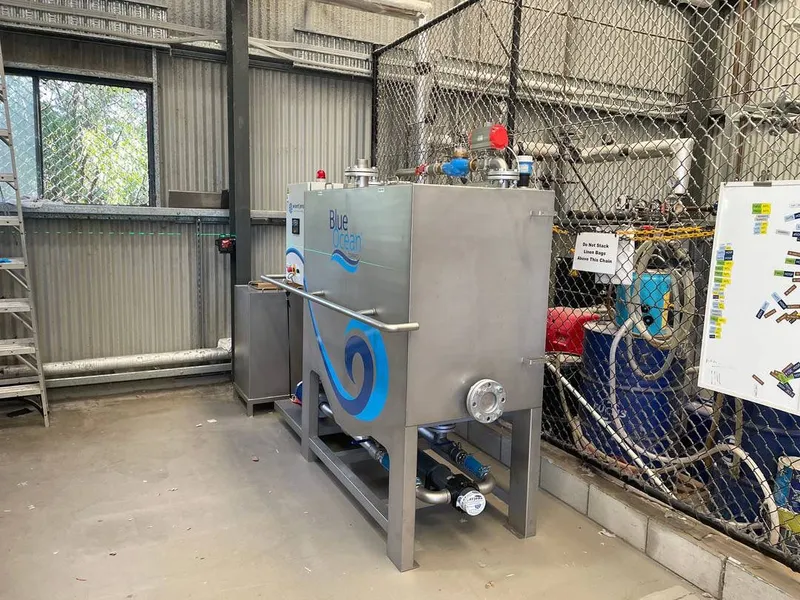
Wientjens’ Vanguard case in Toowoomba describes a commercial laundry processing around 50 tonnes per week, with a tunnel washer and three washer extractors, using Blue Ocean Compact and AquaDrain.
The manufacturer reports 55–60% process-water savings and estimates around 15% energy savings for that laundry. Those figures describe that installation and its measurement scope. A hotel assessment needs the property’s own workload, accepted reuse streams, energy boundary and installed cost.
For equipment features and maintenance requirements, see the Wientjens Blue Ocean product information.
Reporting and guest communication
Keep sustainability claims tied to measured evidence
A water-reuse proposal can define how performance will be measured. Agree the evidence, reporting responsibility and any certification requirements before promising a property-wide environmental result.
Set the measurement boundary
Identify whether the claim covers laundry process water, the on-site laundry utility account or the whole property. Keep water and energy claims separate.
Record the comparison period
Retain baseline and follow-up readings with dates, production volumes and relevant occupancy or linen-service changes.
Confirm the evidence supplied
Ask which meters, logs, reports and data access are included in the proposal. Agree who checks the figures and maintains the records.
Check program requirements
Discuss evidence and the wider assessment with the relevant certification assessor before making a certification or independently verified performance claim.
FAQ
Hotel Laundry Water Recycling FAQ
How much can hotel laundries save with water recycling?
The provider has verified 45–65% laundry water reduction and around 15% gas reduction, with payback as fast as 6 months at 100 tonnes of linen per week. Use your seasonal laundry throughput, utility bills and installed scope to apply these benefits to the property’s cost assessment. Separate laundry savings from whole-property costs, and agree the relevant linen trials and reuse stages.
Is water recycling relevant if our hotel outsources its linen?
Identify where the washing occurs first. A hotel with an on-site laundry can assess its own process and utility use. If linen is outsourced, involve the laundry provider and review the supply contract before attributing utility savings to the hotel. A reduction at the provider’s plant does not automatically reduce the hotel’s water bill or linen-service price.
How do occupancy and seasonality affect equipment selection?
Use actual kilograms washed, operating hours and water use across busy and quiet periods. Include restaurant napery, pool towels, spa linen, events and rewashing where relevant. Compare recoverable flows with reuse demand throughout the day and year. Room count or peak throughput alone does not establish suitable storage, system capacity or annual utilisation.
Will recycling preserve luxury linen quality?
Agree a trial and acceptance criteria with the laundry operator, chemical supplier and linen supplier. Include the property’s relevant fabrics, colours, soiling and wash recipes, then assess the results against its quality requirements. Decide which streams and reuse points are acceptable before routine operation. Equipment filtration specifications alone cannot guarantee whiteness, handle, odour or guest satisfaction.
How should an Australian hotel calculate savings and payback?
Use measured laundry demand, the actual water and wastewater billing basis, energy records and an installed quotation. Apply the provider’s verified 45–65% water reduction and around 15% gas reduction to the relevant laundry costs. Separate laundry consumption from the wider property meter and include added electricity, servicing, consumables, testing and other recurring costs. Compare low, expected and high utilisation. Payback can be as fast as 6 months at 100 tonnes of linen per week; use laundry throughput rather than room count when assessing the investment.
Does water recycling automatically earn an environmental certification?
Certification depends on the relevant program and its wider assessment requirements. Record the baseline, measurement period, meter boundary and production or occupancy changes before making a water or energy claim. Agree which evidence is required with the assessor and confirm what monitoring and reporting the equipment proposal includes. Water recycling alone does not establish certification or independently verified environmental performance.
Can a hotel keep washing during installation and maintenance?
Agree installation windows and a continuity plan for the chosen design. Check fresh-water capacity, isolation or bypass arrangements, planned servicing, alarms and restart procedures. Confirm service coverage and response times in writing, and test the contingency during commissioning. Automatically controlled equipment still needs maintenance and does not guarantee uninterrupted laundry operation.

Assess Your Hotel Laundry’s Recycling Options
Bring your seasonal linen volumes, utility bills and quality requirements to a free ROI assessment.
Use the assessment to define the equipment, cost and commissioning questions for your property.
Explore commercial laundry water recycling in Australia
Wientjens Technology 🇳🇱
DUTCH ENGINEERING
Explore Wientjens Blue Ocean technology. Review the manufacturer's model specifications when assessing your laundry's water and energy recycling options.