
How Commercial Laundry Water Recycling Works
Follow the Wientjens Blue Ocean process from selected wash-water collection to validated reuse. Assess available water, retained heat and laundry demand before modelling your site's savings.
The New Zealand case
Why water recycling pays off for New Zealand laundries
In New Zealand water and wastewater are charged by your local network operator — Watercare in Auckland, and the relevant council utility elsewhere — and a metered commercial laundry pays for supplied water and wastewater under the applicable commercial billing structure. Assess the variable charges, fixed charges and reuse potential separately to estimate operating savings.
Auckland business water supply, including GST
Watercare's 2026–27 business schedule, effective 1 July 2026, prices water supply at NZ$2.46 per 1,000 litres including GST. Wastewater is additional: four commercial plans have different variable rates and annual fixed charges.
Trade-waste agreements
Watercare's trade-waste guidance explains agreements for businesses outside its low-risk classification. Confirm your classification, current conditions and proposed discharge changes; assess both volume and contaminant concentration.
Measure the operating profile
Record kilograms processed, operating hours, incoming water and reusable streams across representative shifts. Match warm-water supply with demand at the proposed reuse stages. A seasonal hotel and a year-round linen plant need different demand profiles in their equipment assessment.
Turn the water balance into a site decision
Trace each stream from washer drain to collection, filtration, storage and the proposed wash-stage connection. Document the final-rinse water quality, wash recipes, linen acceptance checks and remaining discharge. For hotel laundries, include occupancy, spa towels and restaurant napery across peak and quieter months. For hospital laundries, have the responsible team review stream segregation and the facility's hygiene protocols before selecting reuse stages.
Use the installation guide to check pipe routes, backflow controls, service access and the planned connection window. Then use the cost guide to apply the account's variable charges to measured avoidable volumes, keeping fixed charges, servicing and energy use separate.
Compare baseline and commissioning periods using the same meters and kilograms processed. Track litres of fresh water per kilogram as well as the total bill; record production, linen mix and recipe changes so a quieter period is not counted as equipment savings. Confirm any changed wastewater billing percentage with the operator.
Checked 7 October 2026. Watercare's commercial billing guidance lists an 85% wastewater percentage for the laundry industry; confirm the classification on your bill. Other operators use their own structures. Savings modelling separates avoidable variable charges from fixed charges.
New Zealand laundry water recycling process
Key facts at a glance
This page explains how Wientjens Blue Ocean commercial laundry water recycling works for New Zealand hotels, hospitals, aged care laundries, textile rental plants and industrial laundries.
It describes selected process-water collection, self-cleaning filtration, retained heat, validated return to the wash and performance monitoring.
- Service area: New Zealand, including Auckland, Wellington, Christchurch and regional NZ laundries.
- Core technology: Wientjens Blue Ocean, Blue Ocean Compact, AquaMiser, AquaBatch 3 and AquaDrain.
- Performance assessment: Water per kilogram, returned water, discharge, net energy use and actual operating costs.
- Retrofit fit: Confirm washer connections, controls, capacity and site works for the selected model.
- Streams to assess: Hotel, hospital, aged care and textile rental water against intended-use and facility requirements.
Product Range
Wientjens Blue Ocean Systems
Modular, Dutch-engineered systems sized to the operation — covering everything from a compact hotel laundry up to industrial plants handling 100+ tonnes a week.
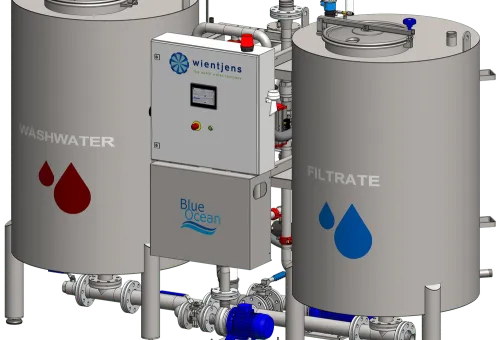
Blue Ocean
Complete System- Recycles up to 15 m³/hour
- Complete water & energy recycling
- Integrated buffer tanks
- Easily adds to existing equipment
Best for hotels, hospitals, industrial laundries processing 1,000+ kg/day
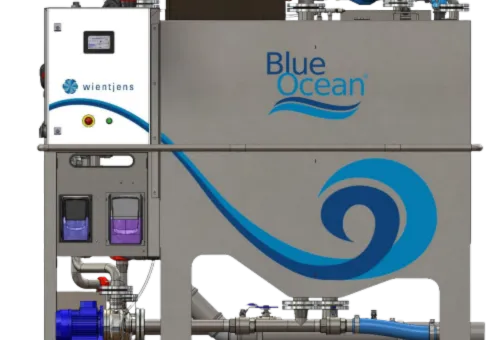
Blue Ocean Compact
Entry-Level- Recycles 5 m³/hour (5KL/hour)
- Ideal for 20-25 tonnes/week
- Compact footprint
- Full water & energy recycling
Best for boutique hotels, aged care, regional laundries processing 350-425 kg/day
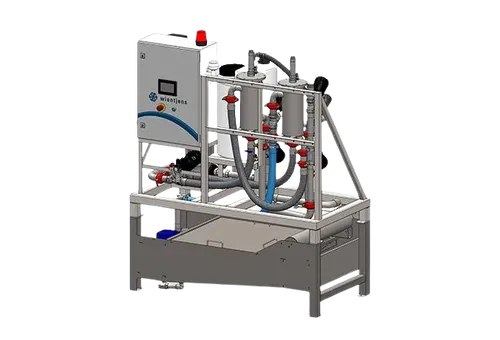
AquaMiser
Compact- Up to 12 m³/hour
- Compact, space-saving footprint
- Easy retrofit to existing equipment
- Affordable performance upgrade
Best for mid-size operations, aged care facilities, boutique hotels
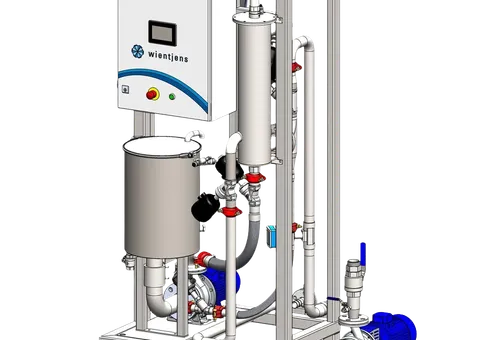
AquaBatch 3
Batch Recycler- Up to 17 m³/hour
- Adds to pre-wash, main wash, or rinse zones
- Removes particles, fibers, and hairs
- Improves wash quality
Best for batch washer operations, textile rental, industrial laundries
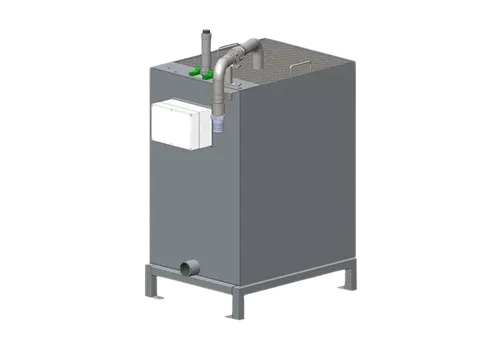
AquaDrain
Filtration Add-on- Filters backflush water before discharge
- Collects solid waste, prevents clogged pipes
- Lowers COD in discharge water
- Integrates with existing drainage
Recommended add-on for all systems and applications
How It Works
5-Step Process Flow
The selected water streams, filtration configuration and reuse stages are confirmed during a site assessment.
Wash Water
Captured as it leaves the tunnel washer or extractors
Self-cleaning Filtration
Removes suspended solids; validate the selected model and reuse quality
Retained Heat
Insulated tanks retain heat in filtered process water for reuse
Process Water Return
Returned to the wash stages selected and validated for the site
Cloud Monitoring
Operating data and alerts to support maintenance planning
Compatibility
Check Integration With Your Existing Equipment
Bring washer models, drain details and a site plan. Confirm the proposed collection and reuse connections with the supplier.
Record the Brand and Model
These are examples of washer brands. Confirm the exact model and connection requirements for your proposed retrofit.
Integration Points
Confirm the intended reuse supply, fresh-water make-up, backflow controls and any bypass arrangement.
Map the selected drain streams, collection points and pipe routes, including work required at the washers.
Plan the service and connection windows
Agree the fresh-water supply, bypass behaviour and maintenance procedure for the selected configuration. Test these arrangements during commissioning and plan any pipe tie-ins around production.
Equipment Example
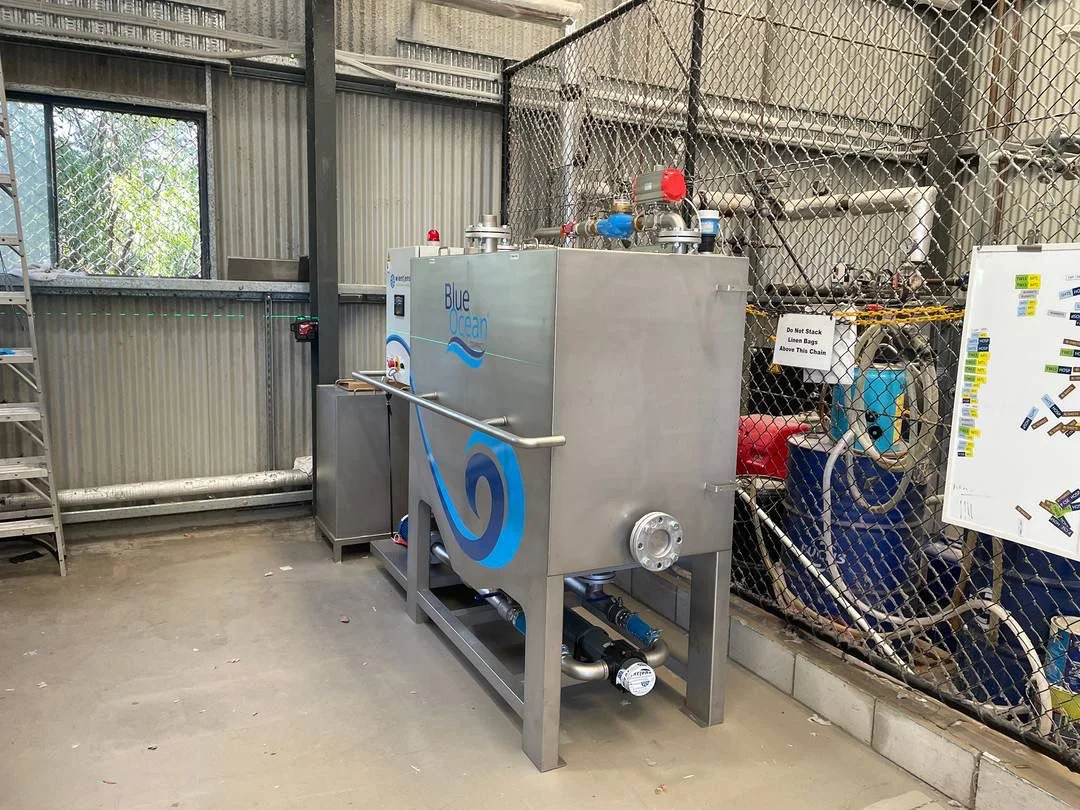
Blue Ocean Compact & AquaDrain Configuration
Equipment example showing a Blue Ocean Compact configuration. Confirm model capacity, tank arrangement, service access and installation timing for your own site.
Suitability Guide
What Water Can Be Recycled?
Not every stream is a candidate for reuse — this is where it works and where it doesn't.
Streams to Assess for Reuse
Streams Requiring Specialist Review
Healthcare assessment: Have the facility's responsible hygiene and laundry teams validate stream separation, intended reuse and wash-process requirements. Filtration alone does not establish infection-control or laundry-standard compliance.
Frequently Asked Questions
Common questions about how water recycling works
How long does the recycling process take?
Blue Ocean uses automatic filtration and buffer tanks to balance available process water with washer demand. Check the selected model's hourly capacity, storage volume and the timing of your wash cycles. Collection, self-cleaning and demand peaks affect the amount available for reuse; your system design should address any shortfall.
Will recycled water affect linen quality or whiteness?
Validate the intended reuse stages with your supplier and laundry team using representative linen and wash recipes. Agree acceptance checks for colour, whiteness, odour, residual chemistry and any hygiene requirements, including the quality required for final rinses. Keep streams separate where the assessment requires it and record trial results before approving changes.
Can all the filtered water be reused, or just some of it?
The usable proportion depends on the water collected, the selected filtration configuration, self-cleaning losses and demand at the approved wash stages. Measure fresh-water intake, returned process water and discharge over the same period. A filter flow rate, a reuse percentage and a reduction in purchased water describe different parts of that water balance.
What happens if the recycling system breaks down?
Blue Ocean provides automatic control and performance monitoring. Confirm maintenance tasks, service arrangements and any bypass configuration for the selected model and site.
How much space does a water recycling system need?
Use the manufacturer's model dimensions and a site layout to check the unit, tanks, pipe routes and service access. Include drainage, electrical capacity, backflow controls and the space needed to remove or maintain components. Agree the installation environment and any enclosure requirements with the supplier before selecting equipment.
How does the Wientjens Blue Ocean system compare to other water recycling technologies?
Blue Ocean combines process-water filtration, insulated buffering and warm-water reuse in an integrated system. Compare the manufacturer's published model specifications, compatible washer connections and maintenance requirements against your laundry's measured demand. Savings and reliability depend on the selected equipment and site design.

Free Assessment
See how it works for your facility
Get a free water audit and customized system design. We'll show you exactly how much you can save and how it integrates with your operation.
Equipment reference: Wientjens' Blue Ocean Filter/Compact description outlines automatic operation, filtration and insulated buffer tanks. Its process brochure describes self-cleaning and performance monitoring. Confirm the selected model's maintenance and service arrangements for your site.
Explore commercial laundry water recycling in New Zealand
Wientjens Technology 🇳🇱
DUTCH ENGINEERING
Explore Wientjens Blue Ocean technology. Review the manufacturer's model specifications when assessing your laundry's water and energy recycling options.