
Commercial Laundry Water Recycling in Auckland
Cut your laundry’s water use by 45–65% and gas use by around 15%. See what water recycling could save at your Auckland facility with a free assessment based on your Watercare bills and laundry volumes.
Auckland commercial laundry water recycling summary
Key facts at a glance
Explore water recycling for Auckland and Greater Auckland commercial laundries, with savings assessed against your Watercare account and daily washing demand.
LaundryWaterSolutions connects hotels, healthcare and aged-care facilities, textile rental operators and commercial laundries with a company that works with Wientjens. The provider confirms the equipment, installation and service arrangements for your site.
- Enquiries: commercial laundries in Auckland and Greater Auckland.
- Auckland locations: CBD, North Shore, South Auckland, East Tamaki, Penrose, Mount Wellington, Wiri, West Auckland and East Auckland.
- Technology: Wientjens Blue Ocean process-water filtration and warm-water reuse; confirm heat-recovery and monitoring options for the selected system.
- Savings: cut water use by 45–65% and gas use by around 15%. Payback can be as fast as six months at 100 tonnes/week, depending on the project.
- Cost basis: your Watercare account, laundry volumes, water reuse opportunities and operating costs.
- Get started: request a free Auckland water recycling assessment and ROI analysis.
Auckland Laundry Costs
Why Auckland Laundries Consider Water Recycling
Assess the water, wastewater and energy costs that your proposed recycling configuration could change, using the commercial charges on your own bill.
Auckland's Water Challenges
- Drought history: Auckland had outdoor water restrictions from May 2020 to October 2021
- Commercial wastewater pricing depends on your plan, fixed charge and industry classification
- Reuse opportunities: assess where recovered process water can replace fresh supply
- Infrastructure investment: Watercare is renewing and expanding water and wastewater assets
- Current charges: Watercare increased water and wastewater prices by 7.2% from 1 July 2026
Impact on Auckland Businesses
- Watercare trade waste: the site’s agreement sets any monitoring requirements
- Water efficiency: reducing fresh-water demand supports the facility’s water-saving plan
- Trade waste billing uses the business wastewater tariff, with administration and monitoring charges additional
- Customer reporting: use measured water and gas results to support sustainability updates
- Operating costs: compare utility savings with installation and ongoing running costs
Understand Your Laundry’s Watercare Costs
Your Watercare account is the starting point for an Auckland savings estimate. Water supply is metered, while commercial wastewater charges depend on the pricing plan, fixed charge and industry classification.
Use your actual laundry volumes and eligible water streams to estimate savings. Keep fixed charges separate and include the proposed system’s running costs when comparing payback.
Cost Analysis
The Auckland Water Cost Reality
Check which charges on your Watercare bill could change when your laundry uses less fresh water.
Auckland Water Charges (Watercare, from 1 July 2026)
Financial Support
Funding & Incentive Support
General business sustainability and waste-minimisation funds may apply; eligibility varies and there is no specific national water-recycling rebate. We help you identify any current programs you may qualify for.
Local Partner Support for Rebates & Incentives
Government rebates and incentives may be available in your region to help reduce the upfront investment in water recycling systems. Programs vary by location and eligibility criteria.
Our local partners will identify all available incentive programs during your site assessment and assist with the application process to maximize your savings.
Risk Management
Make Water Efficiency Part of Your Laundry Plan
Water recycling reduces demand for fresh supply. Your laundry still needs a plan for fresh-water requirements and supply interruptions.
Auckland’s Water-Saving Context
Auckland introduced outdoor water restrictions in May 2020 after a severe drought and lifted the remaining restrictions in October 2021. Check Watercare’s current business restrictions guidance when planning water use at your facility.
Plan ahead: identify eligible reuse points, fresh-water needs and a backup arrangement for supply interruptions. Recycling supports water efficiency; it does not replace the site’s continuity plan.
Wientjens Technology
How It Works
Wientjens Blue Ocean filters selected laundry process water and stores it warm for reuse. Match the model, reuse stages and wash-quality checks to your plant.
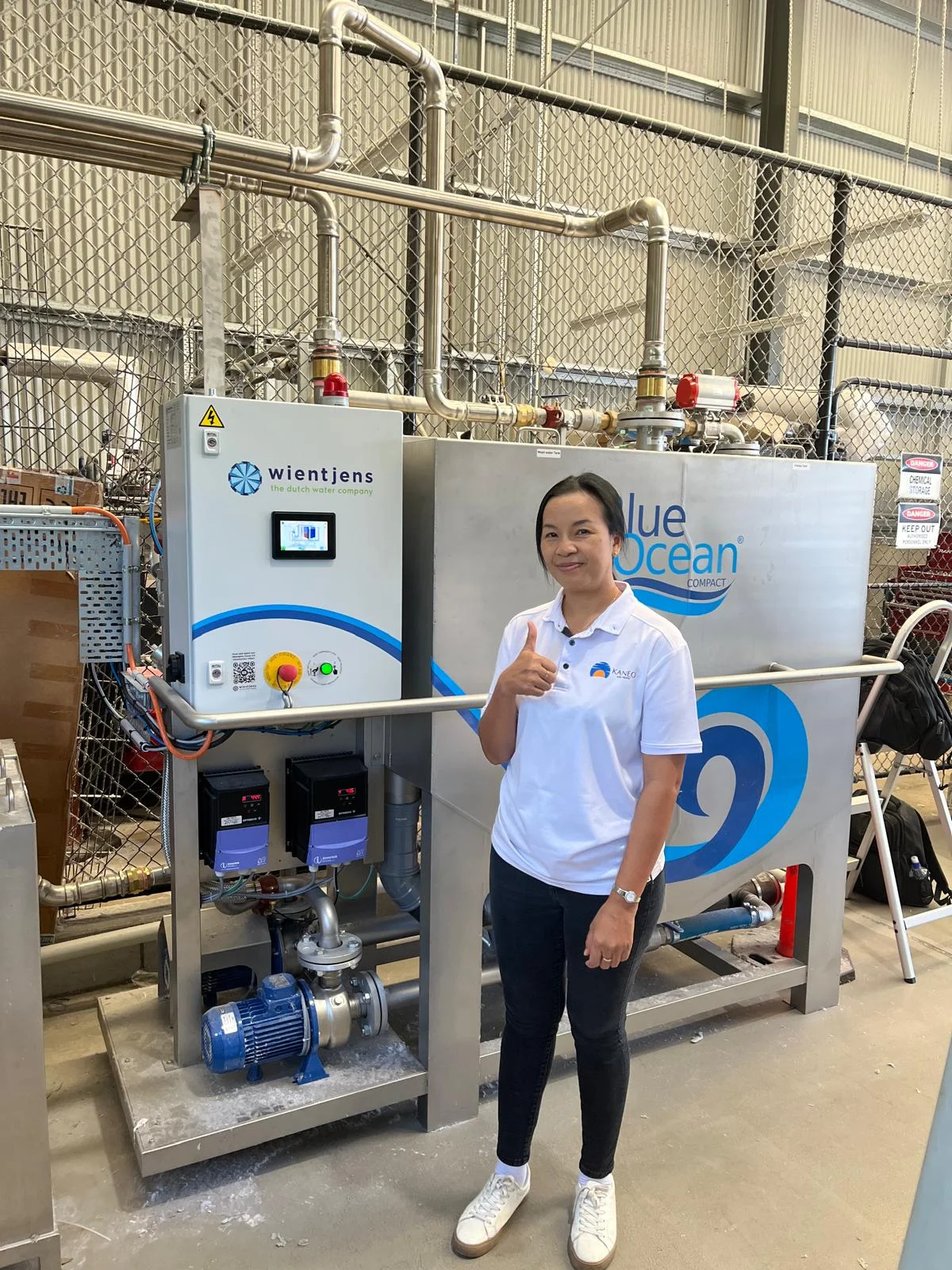
Wientjens Blue Ocean Compact system
Laundry Applications to Assess
- Hotel linen and towel laundries
- Restaurant and hospitality linen operations
- Gym and spa towel laundries
- Workwear plants with suitable water streams
Streams to Review Separately
- Healthcare linen with specific hygiene requirements
- Workwear streams with heavy soiling or contamination
- Mop and cleaning-cloth wash water
- Final rinses and fresh-water stages in the agreed wash programme
How It Works
5-Step Process Flow
Collect, filter and reuse suitable laundry water. The selected design determines controls, monitoring and wash-quality checks.
Wash Water
Collect selected water streams from the washers
Disc Filtration
Disc filtration removes fibres and suspended solids
Warm-Water Buffer
Insulated buffering helps retain warmth for reuse
Process-Water Return
Return filtered water to the agreed wash stages
Controls & Checks
Confirm controls, checks and maintenance for the selected model
Auckland Enquiries
Water Recycling Enquiries Across Greater Auckland
Tell us where your laundry operates. The provider confirms assessment availability, installation arrangements and ongoing service for your location.
Auckland CBD & Inner City
- Auckland CBD
- Newmarket, Parnell
- Mount Eden, Epsom
- Grafton, Grey Lynn
- Ponsonby, Freemans Bay
Western Auckland
- Henderson, New Lynn
- Glen Eden, Titirangi
- Te Atatu, Massey
- Avondale, Blockhouse Bay
- Hobsonville, West Harbour
North Shore
- Takapuna, Devonport
- Albany, Glenfield
- Birkenhead, Northcote
- Browns Bay, Mairangi Bay
- Silverdale, Whangaparaoa
Eastern Suburbs
- Mission Bay, St Heliers
- Remuera, Meadowbank
- Ellerslie, Panmure
- Pakuranga, Howick
- Airport area (Mangere)
Southern Auckland
- Manukau, Otahuhu
- Papatoetoe, Otara
- Manurewa, Papakura
- Pukekohe, Drury
- Waiuku, Karaka
Greater Auckland
- Hibiscus Coast
- Kumeu, Helensville
- Warkworth, Wellsford
- Outside Auckland: confirm your local water operator
- Regional enquiries: contact us
Connect With Our Water Recycling Partner
We connect your Auckland enquiry with a company that works with Wientjens. Ask the provider to confirm who installs the system, how maintenance is arranged and what support is available at your site.
Installation
Installation Process & Timeline
The provider confirms the installation schedule after reviewing your plant. Agree delivery, site preparation, connection downtime and commissioning before work begins.
Site Assessment & Design
Share your Watercare bills, production volumes and washer details. The provider assesses suitable collection and reuse points, equipment sizing, available space and utility connections.
Equipment Delivery & Preparation
Confirm delivery access, equipment placement and service clearances with the provider. The proposal should identify site preparation and any plumbing or electrical changes before delivery.
System Installation
Install the selected equipment and connect the agreed collection and reuse points. The provider should set out the required trades, utility work and washer downtime for your project.
Commissioning & Training
Agree startup checks, trial loads and acceptance results for the selected process. Confirm operator training, routine maintenance and handover responsibilities with the provider.
FAQ
Auckland Laundry Water Recycling FAQs
Common questions from Auckland commercial laundries
How much can Auckland laundries save with water recycling?
Water recycling can cut laundry water use by 45–65% and gas use by around 15%. For laundries processing 100 tonnes/week, payback can be as fast as six months. The bill saving depends on your Watercare pricing plan, industry classification, actual reuse volumes and the proposed system’s running costs. Keep fixed charges separate from variable charges. Request a free assessment using your current bills and laundry production.
Does water recycling work in Auckland's climate and during water restrictions?
Water recycling can reduce the fresh water your laundry needs when suitable streams and reuse stages are available. Check Watercare’s current business restrictions and keep a plan for fresh-water requirements and interruptions. Recycling does not guarantee continued operation during an outage or exempt the facility from applicable restrictions.
What's the installation process for Auckland laundries?
A free assessment starts with your bills, production and washer details. The provider confirms equipment dimensions, tank and service space, reuse connections and utility requirements. Ask for the installation scope, required approvals, responsible trades, project schedule and connection downtime before proceeding. Training, maintenance and follow-up should be included in the agreed proposal.
Is water recycling compliant with Watercare and NZ regulations?
Compliance depends on the site and proposed process. Watercare’s trade-waste requirements vary by business classification; a required agreement sets discharge controls and monitoring. Check any changes with Watercare and the relevant project advisers. Agree eligible reuse stages, wash-quality checks and hygiene requirements with the laundry team. Selecting a filter alone does not establish approval or laundry-process compliance.
Which Auckland laundries can benefit from water recycling?
Hotels, hospitality laundries, healthcare and aged-care facilities, textile rental plants and workwear operators can explore water recycling. Suitability depends on daily and peak laundry volumes, recoverable water streams, washer configuration, space and required linen quality. Healthcare and heavily contaminated loads need a separate process review. The assessment should compare expected utility savings with installation and ongoing operating costs.
How do Auckland water costs compare to other New Zealand cities?
Use the actual commercial account for each facility. Auckland’s Watercare charges include metered water supply and plan-specific wastewater fixed and variable charges; the industry classification also affects wastewater billing. Other regions use their own charging arrangements. Compare the charges that could change with recycling and keep fixed charges, trade-waste requirements and running costs in the estimate.
Auckland billing reference, checked 11 October 2026: Watercare's commercial billing guidance distinguishes four wastewater plans and lists an 85% industry percentage for laundries. Use the business schedule effective 1 July 2026 with your account classification. Keep fixed charges separate from the variable charges that may change with recycling.
Explore commercial laundry water recycling in New Zealand
Wientjens Technology 🇳🇱
DUTCH ENGINEERING
Explore Wientjens Blue Ocean technology. Review the manufacturer's model specifications when assessing your laundry's water and energy recycling options.