Save 45-65% on Wellington Water bills (NZ$5.20/kL - second highest in NZ). Earthquake resilience, seismic strengthening. Seaview, Petone, Porirua, and all Greater Wellington facilities.
Wellington's water costs (NZ$5.20/kL second highest in NZ), earthquake vulnerability (Wellington Fault, 2016 Kaikoura earthquake), Three Waters reform, and aging infrastructure make water recycling essential for Seaview, Petone, and CBD commercial laundry competitiveness and operational resilience
With high combined water and trade waste charges, Wellington businesses face significant operational costs. Water recycling isn't just about environmental responsibility - it's about maintaining competitiveness in a market where water costs can make or break profitability.
Commercial laundries, hotels, and healthcare facilities that invest in water recycling now are protecting themselves against future cost increases while meeting growing sustainability expectations from clients and regulators.
Wellington's combined water and trade waste charges make water recycling one of the highest-ROI investments you can make for your commercial laundry.
Various government programs and incentives may be available to help reduce the upfront investment in water recycling systems.
Government rebates and incentives may be available in your region to help reduce the upfront investment in water recycling systems. Programs vary by location and eligibility criteria.
Our local partners will identify all available incentive programs during your site assessment and assist with the application process to maximize your savings.
Water restrictions periodically impact Wellington. Laundries with recycling systems are better positioned to maintain operations during restrictions while demonstrating environmental leadership.
Wellington experienced severe water restrictions during the Millennium Drought, and climate projections suggest more frequent drought periods ahead. While commercial laundries weren't heavily restricted, future restrictions could impact high-water-use businesses like laundries.
Risk Management: Water recycling systems demonstrate proactive water stewardship and reduce your vulnerability to future restrictions. You're recycling water you've already paid for, reducing dependency on Wellington's water supply.
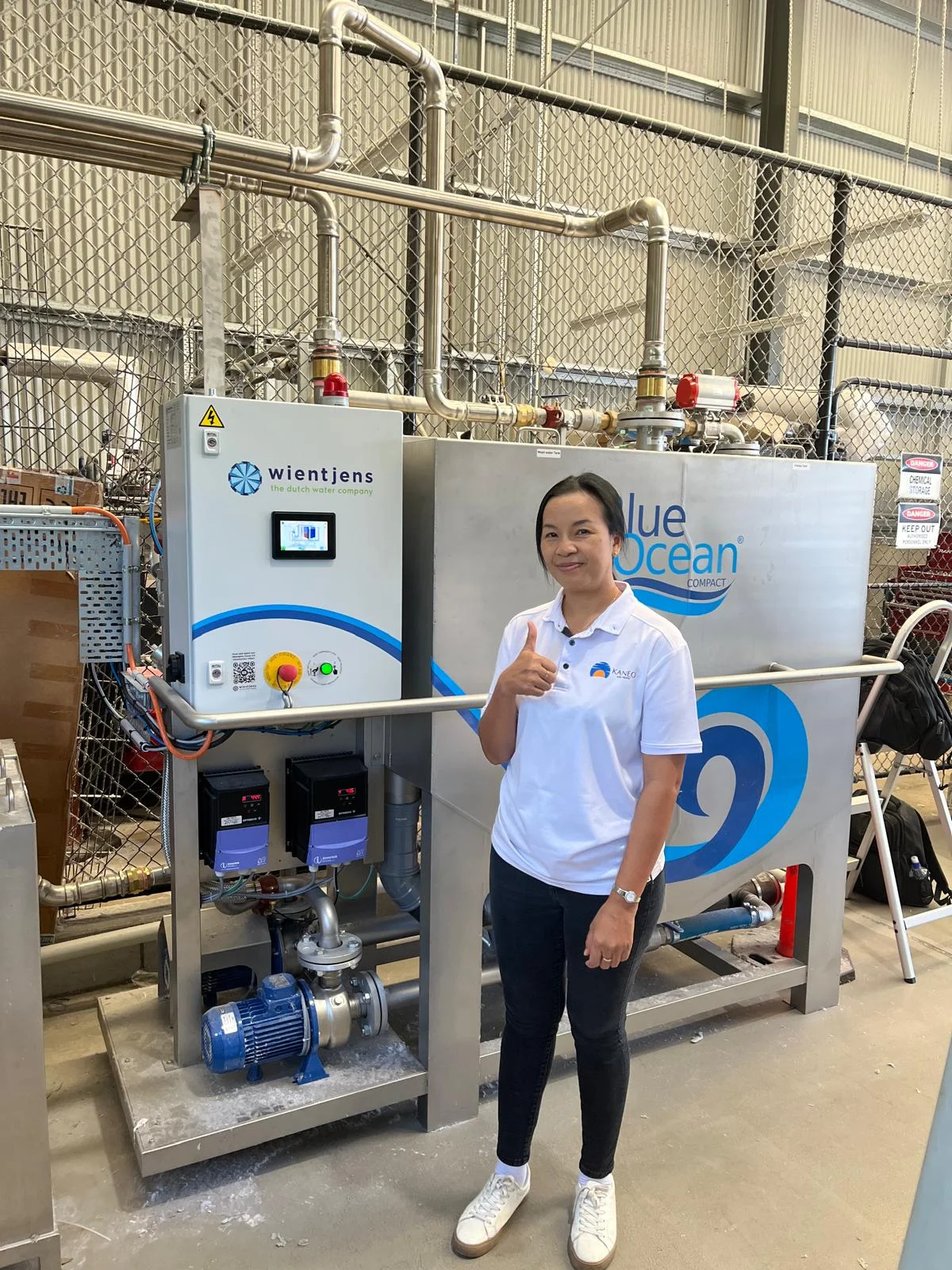
Our Wientjens water recycling systems use advanced 5-stage biological and membrane filtration to deliver clean, safe, AS/NZS 4020-compliant water for washing cycles.
Wientjens Blue Ocean Compact system
Wash cycle water exits tunnel washer or water extractors
Advanced disc filtration removes particles and contaminants
Thermal energy in the filtered water captured and reused
Filtered warm water returns to washing process at higher temperature
Continuous performance tracking and predictive maintenance alerts
We provide complete installation, maintenance, and support throughout the Wellington metropolitan area and surrounding Wellington regions.
Our Wellington-based installation and service team provides on-site support throughout the metro area.
Professional installation typically takes 5-10 business days from start to finish. Most Wellington facilities continue normal operations during installation, with work scheduled during off-peak hours to minimize disruption.
Our engineers visit your facility to assess water usage, available space, existing equipment, and utility connections. We then design a custom system optimized for your operations.
Equipment arrives on-site and is staged for installation. Our team prepares the installation area, including any required electrical or plumbing modifications.
Physical installation of tanks, filters, pumps, and control systems. Plumbing connections are made to washing machines and existing water supply. Electrical connections completed by certified electricians.
System startup, testing, and optimization. Your staff receives comprehensive training on operation, monitoring, and basic maintenance procedures.
Common questions from Wellington commercial laundries
Wellington commercial laundries achieve substantial savings with Wientjens Blue Ocean water recycling due to New Zealand's second-highest combined water and wastewater costs. Wellington Water charges (Wellington region): Water supply rates: NZ$2.60/kL (volumetric charge). Wastewater discharge: NZ$2.60/kL (trade waste volumetric charge). Combined water + wastewater costs: NZ$5.20/kL total (second highest in New Zealand after Auckland NZ$5.80/kL, higher than Christchurch NZ$4.65/kL). Water recycling reduces consumption 45-65%, translating to substantial annual savings by facility type: Hotels (200 rooms, 2000kg/day) - Save NZ$67K-NZ$131K/year on water alone. 150 rooms × 3 kg linen/day = 450kg laundry. 450kg × 7L/kg = 3,150L daily water use. 3,150L × 365 days = 1,149,750L annually (1,150 kL). 50% water savings × 1,150 kL × NZ$5.20/kL = NZ$2,990/year per room × 200 rooms = range of NZ$67K-NZ$131K based on 45-65% savings. Healthcare Facilities (200 beds, 3000kg/day) - Save NZ$100K-NZ$249K/year. Medical linen 2.5kg/bed/day × 200 beds = 500kg. Additional ward linen and gowns = 2,500kg. Total 3,000kg × 7L/kg = 21,000L daily. 21,000L × 365 = 7,665,000L annually (7,665 kL). 50% savings × 7,665 kL × NZ$5.20/kL = NZ$100K-NZ$249K annually. Aged Care (100 beds, 1200kg/day) - Save NZ$32K-NZ$62K/year. 100 beds × 2kg linen/bed/day = 200kg personal linen. Plus 1,000kg facility linen (towels, bed pads, dining) = 1,200kg. 1,200kg × 7L/kg = 8,400L daily. 8,400L × 365 = 3,066,000L (3,066 kL). 50% savings × 3,066 kL × NZ$5.20/kL = NZ$32K-NZ$62K annually. Commercial Laundries (100 tonnes/week) - Save NZ$158K-NZ$360K/year. 100,000kg ÷ 7 days = 14,286kg daily. 14,286kg × 7L/kg = 100,000L daily. 100,000L × 365 = 36,500,000L (36,500 kL). 50% savings × 36,500 kL × NZ$5.20/kL = NZ$158K-NZ$360K annually. Additional savings: 12-15% gas savings from heat recovery (warm recycled water requires less heating - particularly valuable in Wellington's cooler climate). Reduced trade waste surcharges from Wellington Water. Reduced chemical usage (cleaner recycled water). Wellington earthquake resilience - water recycling provides backup during water infrastructure disruptions. Typical ROI: 10-16 months for facilities processing 50+ tonnes/week (second fastest in New Zealand after Auckland). 16-22 months for smaller facilities (20-50 tonnes/week). Wellington has second-fastest payback in New Zealand due to second-highest water costs (NZ$5.20/kL).
Yes, water recycling works exceptionally well in Wellington's temperate maritime climate and is actually most valuable during Wellington's infrastructure vulnerability and water capacity constraints. System operation in Wellington conditions: Operates indoors in climate-controlled space, unaffected by Wellington's temperate maritime climate (moderate temperatures, high winds, regular rainfall). System performance consistent year-round with 45-65% water savings regardless of season. Works well in Wellington's windy, variable weather environment (though weather doesn't affect indoor system operation). Wellington water infrastructure context: Wellington faces unique water infrastructure challenges due to seismic activity and aging pipe networks. Major earthquake risk (Wellington sits on multiple fault lines including Wellington Fault) threatens water supply infrastructure. 2016 Kaikoura earthquake demonstrated vulnerability of water infrastructure to seismic events. Wellington Water managing significant earthquake strengthening and pipe renewal programs. Population growth in Greater Wellington (540,000+) increasing demand on limited infrastructure capacity. Historical water capacity issues in Wellington: 2019 water restrictions considered due to infrastructure capacity constraints. Regular water main breaks and service interruptions due to aging pipes. Earthquake preparedness plans highlight water supply as critical vulnerability. Wellington Water's infrastructure renewal backlog estimated at hundreds of millions of dollars. Water recycling during infrastructure disruptions: Commercial laundries with recycling systems gain partial independence from Wellington Water network during disruptions. Recycled water provides operational continuity during water main breaks or earthquake-related supply interruptions. Future-proofs operation against seismic risk and infrastructure failures. Reduces vulnerability to Wellington Water supply capacity constraints. Wellington Water strategy: Wellington Water's Asset Management Plan projects significant infrastructure investment requirements. Target water conservation and efficiency improvements to defer expensive new infrastructure. Emphasis on water recycling for high-use commercial operations. Commercial laundries identified as priority sector for water efficiency. Three Waters reform implementation will drive infrastructure upgrades and associated cost increases. New Zealand Three Waters Reform context: Three Waters reform program aims to improve water infrastructure nationwide. Wellington region particularly affected given significant infrastructure deficit and earthquake strengthening requirements. Reform expected to drive water cost increases to fund infrastructure upgrades (estimated NZ$2-3 billion for Wellington region). Wellington likely to see 5-8% annual water price increases to fund earthquake resilience and pipe renewal programs. Water recycling provides hedge against future cost increases under reformed water management structure. Wellington-specific water challenges: Seismic vulnerability - Major earthquake could severely damage water supply infrastructure, treatment plants, and distribution network. Aging infrastructure - Wellington's water pipes among oldest in New Zealand, with high failure rates. Limited water storage - Wellington has limited reservoir capacity compared to Auckland or Christchurch. Treatment plant capacity - Existing treatment plants at or near capacity, expensive upgrades required. Harbour and coastal protection - Trade waste discharge to Wellington Harbour under strict environmental controls. Climate change impacts - Changing rainfall patterns affecting catchment yield and water availability.
Installation of Wientjens Blue Ocean water recycling systems in Wellington typically takes 5-7 days with minimal disruption to ongoing operations. Wellington-specific installation process: Week 1 - Pre-Installation Assessment (1-2 days): Free site visit across Greater Wellington (CBD, Lower Hutt, Upper Hutt, Porirua, Kapiti Coast). Wellington-based installation team conducts detailed water audit and space assessment. Engineering team measures current water consumption from Wellington Water bills, identifies optimal equipment location. Review existing laundry equipment (Primus, Miele, Electrolux, Jensen, Alliance compatibility). Site assessment covers: Current water usage from Wellington Water bills (NZ$5.20/kL combined rate). Available floor space (systems fit in 3m × 4m footprint for Compact models). Existing plumbing and drainage capacity. Electrical supply adequacy (3-phase power for larger systems). Building access for equipment delivery (standard doorways OK for Compact, larger access for Medium/Large systems). Wellington building consent and earthquake strengthening requirements. Week 2-3 - Equipment Delivery & Preparation (3-5 days): Equipment ships from factory or Australian distribution, arrives at your Wellington facility. Licensed New Zealand plumbers and electricians prepare the site. Plumbing modifications to redirect wastewater from washers to recycling system. Electrical connections installed by licensed NZ electricians (registered under Electrical Workers Registration Board). Building modifications if needed (concrete pad for heavy equipment, wall penetrations for piping). Earthquake restraints and seismic bracing as required by Wellington building codes. Week 3-4 - System Installation (2-3 days): Wientjens Blue Ocean system installed and connected with appropriate seismic restraints. Piping connections to laundry machines (tunnel washers, CBWs, batch washers). Control system integrated with existing equipment. System filled and initial testing performed. Week 4 - Commissioning & Training (1-2 days): System startup with full testing and optimization. Water quality verification to AS/NZS 4020 standards (NZ Drinking Water Standards compliance). Staff training on system operation, monitoring, basic troubleshooting. Cloud monitoring system activated for remote performance tracking. Wellington Water & Council compliance: Wellington Water trade waste approval arranged by local partner (pre-approved process for compliant water recycling systems). Building consent coordination with Wellington City Council, Hutt City Council, Porirua City Council, or Kapiti Coast District Council (depending on location). NZ plumbing regulations (AS/NZS 3500 NZ variations) compliance verified. Licensed Building Practitioners (LBP) requirements met for building work. Earthquake strengthening requirements met per Wellington building codes. Service areas: All Greater Wellington regions serviced: Wellington City - Wellington CBD, Te Aro, Newtown, Kilbirnie, Miramar, Island Bay, Karori, Kelburn, Thorndon. Lower Hutt - Petone, Naenae, Taita, Wainuiomata, Eastbourne, Seaview (industrial area). Upper Hutt - Upper Hutt CBD, Trentham, Heretaunga, Silverstream. Porirua - Porirua CBD, Whitby, Titahi Bay, Papakowhai, Cannons Creek. Kapiti Coast - Paraparaumu, Waikanae, Raumati, Otaki. Minimal operational disruption: Most Wellington facilities continue normal operations during installation. Work scheduled during off-peak hours or weekends if preferred (important for 24/7 hospital laundries). Phased installation minimizes downtime. Typical operational impact: 2-4 hours downtime for plumbing connections to washers.
Yes, Wientjens Blue Ocean water recycling systems are fully compliant with all Wellington Water trade waste regulations, New Zealand environmental requirements, and NZ building codes including Wellington's earthquake strengthening requirements. Regulatory compliance: Wellington Water Trade Waste Bylaw - systems meet all discharge quality standards and reduce trade waste volume by 45-65%, lowering trade waste charges (NZ$2.60/kL). Wellington/Hutt/Porirua/Kapiti Council Trade Waste - compliance with local council environmental discharge requirements. AS/NZS 3500 Plumbing and Drainage (NZ variations) - all installations performed by licensed NZ plumbers meeting NZ plumbing code requirements. AS/NZS 4020 Water Supply Standards - recycled water meets NZ Drinking Water Standards for non-potable reuse in washing cycles (recycled water used in pre-wash and main wash, fresh water always used for final rinse). New Zealand Building Code - all building modifications meet NZBC requirements, consents arranged through appropriate Wellington region council. Wellington earthquake strengthening requirements - systems installed with appropriate seismic restraints and bracing meeting Wellington building codes. Electrical Workers Registration Board - electrical installations by registered NZ electricians. Resource Management Act compliance - systems reduce wastewater discharge to Wellington Harbour and Cook Strait, meeting RMA environmental standards. NZ Health and Safety at Work Act - all installations meet workplace safety requirements. Water quality monitoring: Systems include continuous monitoring with cloud-based dashboards accessible from anywhere in Wellington/NZ. Water quality testing protocols ensure ongoing compliance with NZ standards. Real-time alerts if water quality deviates from standards. pH, turbidity, and temperature monitoring. Wellington Water pre-approval process: Wellington Water has streamlined approval process for commercial laundry water recycling systems that meet AS/NZS standards. Local partners handle all Wellington Water trade waste documentation and approvals. Trade waste agreement amendments reflect reduced discharge volumes. Potential trade waste charge reductions due to lower discharge volumes (typical 45-65% reduction from base of NZ$2.60/kL). Insurance and liability: Systems include full liability insurance coverage for NZ operations. Installation warranty covers all equipment and installation work including seismic restraints. Ongoing maintenance plans ensure continued regulatory compliance. Public liability insurance covers any water quality issues (never occurred in 25+ year history). Industry certifications: Wientjens systems certified to international standards (CE, ISO 9001). Blue Ocean technology approved by water utilities across Australia, Europe, Asia, and New Zealand. 1,500+ installations worldwide with zero regulatory compliance issues. Systems designed to remain operational through moderate earthquakes with appropriate seismic restraints. New Zealand Government support: NZ Government's water reform initiatives encourage commercial water recycling. Potential eligibility for business sustainability grants and incentives. Recognition under Wellington Water's water efficiency programs. Three Waters reform expected to further incentivize water efficiency and recycling. Wellington regional environmental strategies promote water recycling to protect harbour and coastal marine environment.
Any Wellington commercial laundry processing 2+ tonnes daily can benefit from water recycling, with excellent ROI given Wellington's second-highest water costs in New Zealand. Best suited for Wellington facilities: Healthcare Facilities - Public hospitals and healthcare centers across Wellington region. Private hospitals and medical facilities. Aged care facilities across Wellington region. Pathology and medical linen services. Hotels & Hospitality - CBD hotels and accommodation facilities. Waterfront hotels and resorts. Airport hotels and motels. Regional tourism operators (Kapiti Coast, Wairarapa). Commercial Laundries - Industrial laundries in Seaview (Lower Hutt), Petone, Porirua, Grenada North. Hotel linen services across Wellington region. Healthcare linen specialists. Hospitality linen services. Aged Care & Retirement - Large aged care facilities (100+ beds) across Wellington region. Retirement village laundry facilities. Respite care centers. Education & Institutional - University residential halls and campus accommodations. Boarding schools across Wellington region. Correctional facility laundries. Government & Defence - Government department laundries. Defence Force facilities. Hospitality & Food Service - Restaurant and cafe linen services. Catering company laundry operations. Sports stadium and event laundries. Sports & Recreation - Sports club laundries (rugby clubs, cricket clubs, sailing clubs). Fitness center towel services across Wellington. Swimming pool and aquatic center facilities. Optimal facility profiles: Processing 2,000+ kg daily (20+ tonnes weekly) - ROI typically 10-16 months (second fastest in New Zealand). Processing 1,000-2,000 kg daily (10-20 tonnes weekly) - ROI typically 16-22 months. Processing 500-1,000 kg daily (5-10 tonnes weekly) - ROI typically 22-32 months. High-frequency washing operations (hotels with daily linen changes, medical facilities with multiple daily loads). Facilities with high Wellington Water water and trade waste charges (NZ$5.20/kL combined - second highest in NZ). Businesses with environmental reporting requirements or sustainability goals. Facilities wanting earthquake resilience through reduced dependence on water infrastructure. Wellington suburbs/areas with highest concentration of suitable facilities: Wellington CBD - CBD, Te Aro, Thorndon (hotels, hospitality, government facilities). Newtown (hospital precinct). Lower Hutt - Seaview, Petone, Gracefield (industrial laundry hub). Hospital precinct. Eastbourne, Wainuiomata (aged care, commercial operations). Upper Hutt - Upper Hutt CBD (commercial laundries). Heretaunga, Trentham (aged care facilities). Porirua - Porirua CBD, Whitby (commercial laundries, aged care). Hospital area. Kapiti Coast - Paraparaumu, Waikanae (aged care, tourism accommodation). Not suitable for: Small operations processing less than 300kg daily (payback exceeds 32 months). Heavily soiled industrial workwear requiring 100% fresh water. Facilities washing mop heads or heavily contaminated textiles exclusively. Facilities processing exclusively surgical or infection-control laundry (medical facilities typically use recycling for general ward linen, patient gowns, sheets, towels - surgical linens use fresh water).
Wellington has the second-highest combined water and wastewater costs in New Zealand (after Auckland), making water recycling highly valuable for Wellington commercial laundries. New Zealand city comparison (2025 rates): Auckland (Watercare) - Water: NZ$2.908/kL, Wastewater: NZ$2.904/kL, Combined: NZ$5.80/kL (HIGHEST IN NZ). Wellington (Wellington Water) - Water: NZ$2.60/kL, Wastewater: NZ$2.60/kL, Combined: NZ$5.20/kL (SECOND HIGHEST IN NZ). Christchurch (Christchurch City Council) - Water: NZ$2.32/kL, Wastewater: NZ$2.33/kL, Combined: NZ$4.65/kL (THIRD). Wellington-specific cost drivers: Wellington Water has increased prices 5-8% annually over past 5 years. Aging infrastructure replacement driving capital costs (earthquake vulnerable pipes, treatment plants). Seismic strengthening requirements adding significant costs to infrastructure projects. Population growth in Greater Wellington (540,000+) creating demand pressures. Harbour environmental protection requiring advanced wastewater treatment. Three Waters reform expected to drive further price increases. Water price projections for Wellington: Three Waters reform implementation expected to require 5-8% annual increases through 2030. Wellington region infrastructure deficit (estimated NZ$2-3 billion) will drive higher charges. Earthquake resilience requirements particularly expensive for Wellington given seismic risk. Combined rates projected to reach NZ$6.00-$6.50/kL by 2028-2030. Wellington laundry cost comparison: Small laundry (20 tonnes/week, 2,600 kL/year): Wellington: NZ$13,520/year water costs (SECOND HIGHEST IN NZ). Auckland: NZ$15,080/year (12% more expensive than Wellington). Christchurch: NZ$12,090/year (11% cheaper than Wellington). Medium laundry (50 tonnes/week, 6,500 kL/year): Wellington: NZ$33,800/year water costs (SECOND HIGHEST IN NZ). Auckland: NZ$37,700/year (12% more expensive). Christchurch: NZ$30,225/year (11% cheaper). Large laundry (100 tonnes/week, 13,000 kL/year): Wellington: NZ$67,600/year water costs (SECOND HIGHEST IN NZ). Auckland: NZ$75,400/year (12% more expensive). Christchurch: NZ$60,450/year (11% cheaper). ROI comparison by NZ city: Auckland - Fastest ROI in New Zealand (6-12 months) due to highest water costs (NZ$5.80/kL). Wellington - Second fastest ROI (10-16 months) with NZ$5.20/kL costs (SECOND FASTEST). Christchurch - Moderate ROI (14-20 months) with NZ$4.65/kL costs. Wellington's competitive advantage: Wellington laundries with water recycling save NZ$2.34-NZ$3.38/kL (45-65% of NZ$5.20/kL). This creates significant competitive cost advantage over laundries without recycling (second-best in New Zealand after Auckland). As Wellington water prices continue rising under Three Waters reform (projected 5-8% annually), savings gap widens. Wellington's earthquake resilience benefit adds unique value - water recycling provides operational continuity during infrastructure disruptions. Wellington-based commercial laundries gain both cost savings and earthquake preparedness. Wellington vs Regional NZ: Regional NZ councils - highly variable costs (NZ$3.50-$5.50/kL) depending on local water source and infrastructure. Wairarapa region (Masterton, Carterton, South Wairarapa) - typically NZ$4.00-$4.50/kL. Three Waters reform expected to standardize and likely increase regional costs. Wellington vs Australia comparison: Wellington NZ$5.20/kL similar to Australian capitals: higher than Perth AU$4.20/kL, Brisbane AU$4.40/kL, Melbourne AU$4.90/kL; slightly lower than Adelaide AU$5.35/kL and Sydney AU$5.70/kL when adjusted for exchange rates. Wellington vs International: Wellington water costs among highest in Australasia region. Singapore (SGD$5.25-$6.49/kL with Water Conservation Tax) comparable to Wellington. Three Waters reform may push Wellington costs closer to Auckland levels by 2030. Conclusion: Wellington's position as second-most-expensive water market in New Zealand means water recycling delivers second-fastest ROI, typically 10-16 months for facilities processing 50+ tonnes weekly. With Three Waters reform driving projected 5-8% annual increases, significant earthquake resilience infrastructure requirements, and aging pipe renewal needs, Wellington offers excellent value proposition for water recycling. Wellington laundries gain both cost savings and operational resilience against seismic risk.
Powered by Wientjens 🇳🇱
DUTCH ENGINEERING EXCELLENCE
Official Blue Ocean technology partner for Australia, New Zealand, Singapore, Thailand & Southeast Asia. Trusted by commercial laundries worldwide for proven water and energy recycling solutions.