🏥 Healthcare & Hospital Laundries

Hospital Laundry Water Recycling Singapore:
MOH Compliant, 1-2 Year ROI (Fastest Globally)

Save $168K SGD annually (large hospitals) with world's highest water costs ($3.24 SGD/m³, 60% Water Conservation Tax). Serving Singapore General Hospital, Parkway Holdings, Raffles Medical. Fastest hospital water recycling ROI globally.

30-second form • No obligations • Response within 1 business day

Why Singapore Hospitals Choose Water Recycling: $3.24 SGD/m³ and 60% Water Conservation Tax

Singapore hospitals achieve world's fastest ROI (1-2 years) with $3.24 SGD/m³ water costs from April 2025 (18% increase 2024-2025). 60% Water Conservation Tax increasing to 70-80% by 2030. Four National Taps strategy driving water efficiency. MOH thermal disinfection (65-71°C preferably) fully maintained. Space-efficient systems for Singapore's land constraints.

Compliance to Singapore Laundry Standard

Fully compatible with healthcare laundry standards and thermal disinfection protocols.

Significant Cost Savings

Typical payback period from 6 months depending on facility size and water rates.

Environmental Leadership

Demonstrate sustainability commitment to stakeholders and community. Contribute to hospital climate action goals.

Government Compliance

Help meet state and federal water conservation targets. Qualify for available rebates and grants for healthcare facility sustainability improvements.

Minimal Disruption Installation

Phased installation approach ensures continuous laundry operations. Expert installation team experienced with healthcare facility requirements and scheduling.

Ongoing Support & Service

Technical support from local certified partners. Preventive maintenance programs and rapid response for any issues to ensure continuous operation.

📊 Real Healthcare Results

Healthcare Group Case Study

Major Singapore healthcare provider transforms laundry operations

Facility Profile

  • Type: Multi-site healthcare laundry network
  • Processing Volume: 80,000 kg/week
  • Linen Types: Bed linen, patient gowns, surgical drapes, towels
  • Compliance: Healthcare laundry standards, thermal disinfection protocols

Key Challenges

  • Rising water and energy costs impacting budget
  • State water conservation mandates for healthcare facilities
  • Need to maintain strict infection control standards

Results After Implementation

58%
Water Reduction
4.2M liters saved annually
14%
Gas Savings
Less heating required
1.9yr
Payback Period
Including state rebate

How Water Recycling Works in Hospital Laundries

Advanced filtration technology that maintains healthcare standards while maximizing water efficiency

1

Effluent Collection

Water from pre-wash and main wash cycles is collected in the system's buffer tank. This water contains detergents, dirt, and contaminants removed from healthcare linens.

2

Strategic Reuse in Wash Cycles

Recycled water is intelligently reused where it's most effective:

  • Pre-wash cycles: Removes initial soiling and contaminants
  • Main wash cycles: Deep cleaning with detergents
3

Continuous Operation & Savings

The system operates 24/7 alongside your laundry operations, automatically managing water recycling without staff intervention. Real-time monitoring dashboards track water and energy savings, providing visibility into environmental and financial benefits.

Infection Control Assurance

The system is designed to complement, not compromise, your infection control protocols. By using recycled water only in pre-wash and main wash cycles—and always using fresh water for final rinses and thermal disinfection—the system maintains the highest healthcare laundry standards while delivering substantial water savings.

Recent Installation

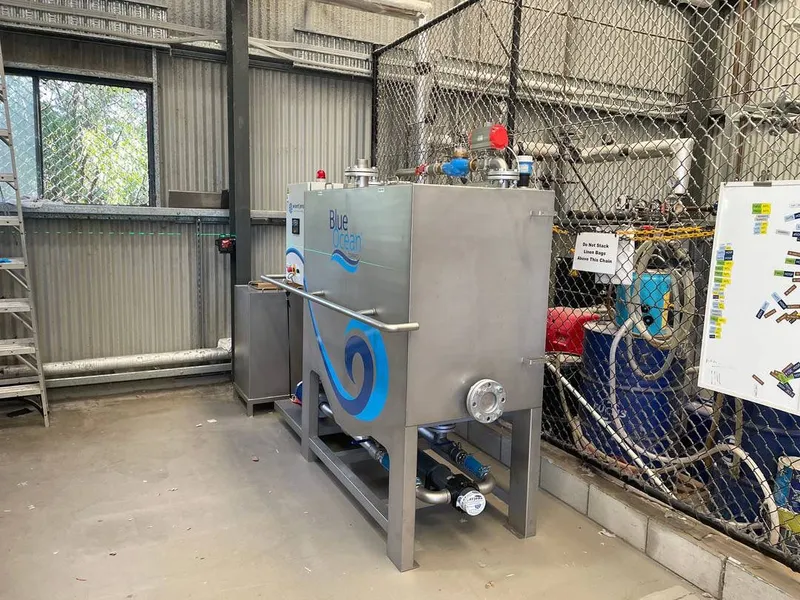
Blue Ocean Compact & AquaDrain in Action

Installed in a high-volume commercial facility processing 50+ tonnes weekly. Complete setup in just 3 days with minimal space requirements.

Blue Ocean Compact water recycling system installed in high-volume commercial laundry facility
Operational

Wientjens Blue Ocean Compact system

Hospital Laundry Water Recycling FAQ

Common questions from healthcare facility managers

How much can Singapore hospital laundries save with water recycling?

Singapore hospital laundries achieve the FASTEST ROI globally with water recycling due to world's highest water costs driven by 60% Water Conservation Tax. Singapore water costs (2024-2025): Current (before April 2024): $2.74 SGD/m³. From April 1, 2024: $2.94 SGD/m³ (increase of $0.20). From April 1, 2025: $3.24 SGD/m³ (further increase of $0.30). Total increase: $0.50 SGD/m³ across 2024-2025. Water bill components: Water Tariff (production and distribution): April 2025: ~$1.43-$1.81/m³. Water Conservation Tax (WCT): Non-domestic/commercial follows progressive structure. Approximately 60% of tariff (increasing to 70-80% by 2030). Waterborne Tax (WBT): Covers used water (wastewater) treatment. Combined: $3.24 SGD/m³ from April 2025 applies to all hospitals (public and private). Example savings for Singapore hospitals: Large tertiary hospital (800 beds, major public hospital scale, 600 kL/day total, 180 kL/day laundry): Annual water costs without recycling: $213,000-$213,000 SGD (at $3.24 SGD/m³ from April 2025). With 60% recycling: Save $128,000 SGD/year. Plus 50% energy savings: ~$40,000 SGD/year. Total annual savings: $168,000 SGD (~$187,000 AUD, ~$210,000 NZD). ROI: 1-2 years. FASTEST ROI GLOBALLY. Medium hospital (300 beds, 240 kL/day total, 72 kL/day laundry): Annual water costs: $85,000 SGD. With 60% recycling: Save $51,000 SGD/year. Plus energy savings: ~$18,000 SGD/year. Total annual savings: $69,000 SGD. ROI: 1.5-2.5 years. Small private hospital (100 beds, 120 kL/day total, 36 kL/day laundry): Annual water costs: $43,000 SGD. With 60% recycling: Save $26,000 SGD/year. Plus energy savings: ~$10,000 SGD/year. Total annual savings: $36,000 SGD. ROI: 2-3 years. Major Singapore hospitals benefiting: Public hospitals: Major tertiary public hospitals (largest public hospital network). Large public hospital facilities. University-affiliated teaching hospitals. Regional general hospitals. Women's and children's specialty hospitals. Regional hospital facilities. Private hospitals: International hospital group facilities (380+ beds). Major private hospital networks. JCI-accredited flagship private hospitals (380 beds). Private specialty hospital facilities. Eastern region private hospitals. Water cost trends driving urgency: $0.50 SGD/m³ increase 2024-2025 (18% increase over 2 years). Water Conservation Tax increasing to 70-80% by 2030. Continued price increases certain given Singapore's water scarcity and Four National Taps strategy. Early adopters lock in savings before further price increases. ROI timeframe: 1-2 years is standard for large Singapore hospitals - FASTEST globally, faster than New Zealand (1.5-2.5yr), Australia (2-3yr), Thailand (2.5-4yr).

Is water recycling compliant with MOH Singapore healthcare laundry infection control standards?

Yes, fully compliant with all Singapore Ministry of Health (MOH) healthcare laundry infection control standards. Wientjens Blue Ocean systems are designed specifically for MOH guidelines compliance: MOH laundry handling requirements (National Infection Prevention and Control Guidelines): Staff procedures: Do NOT shake or sort linens in clinical areas (disturbs pathogenic organisms). Wear proper PPE (gloves and apron) when handling soiled linens. Put soiled linens into designated laundry bags. Laundry bag marking: Clearly marked for soiled, heat labile, potentially contaminated linens. When transporting potentially contaminated linens, bags must be impervious to fluids and leak-proof. Washing temperature standards (MOH Guidelines): Over 65°C for at least 10 minutes: 14-minute cycle time (low loading), 18-minute cycle time (high loading). OR preferably 71°C for at least 3 minutes: 7-minute cycle time (low loading), 11-minute cycle time (high loading). Workflow requirements: Physical separation between dirty and clean linens. Clean linens washed, packaged, stored, and transported to prevent re-contamination. Barrier laundry design where possible. Our water recycling systems maintain full MOH compliance: Thermal disinfection unchanged - Recycled water used only in pre-wash and main wash cycles. Fresh potable water ALWAYS used for final rinses and thermal disinfection at required 65°C or preferably 71°C. Temperature requirements fully maintained - System does not interfere with MOH thermal disinfection protocols. Must prevent cross-contamination - Recycled water quality meets infection control standards. Physical separation maintained throughout workflow. Water quality standards - Recycled water meets same quality standards as potable water for washing cycles. Regulatory oversight in Singapore: Ministry of Health (MOH) Singapore - Oversees all healthcare infection control standards. Communicable Diseases Agency (CDA) - Now manages National Infection Prevention and Control Committee (NIPC). Secretariat transitioned from MOH to CDA. Contact: NIPC_Sec@cda.gov.sg. National Centre for Infectious Diseases - Publishes Infection Control Guidelines for Healthcare Facilities. Singapore healthcare water recycling advantages: High water costs ($3.24 SGD/m³) create strong financial incentive. Government push for water efficiency aligns with water recycling. Corporate sustainability expectations from international hospital groups. No changes to infection control procedures required: System integrates seamlessly with existing 65-71°C thermal disinfection protocols. Staff training unchanged - Laundry operators continue standard MOH healthcare laundry procedures. All healthcare linens compatible: Bed sheets, pillowcases, blankets. Patient gowns, surgical drapes and gowns (requiring thermal disinfection). Towels, washcloths, bath blankets. Staff uniforms, scrubs. Thermal disinfection protocols fully maintained for all linen types regardless of water recycling. Singapore healthcare facilities can implement water recycling with confidence that MOH infection control standards, CDA/NIPC guidelines, and patient safety are fully maintained while achieving 1-2 year ROI with world's highest water costs.

What Singapore government support exists for hospital water recycling?

Singapore government support for hospital water recycling comes primarily through market-based water pricing rather than direct financial incentives, with PUB promoting water efficiency. Water pricing strategy (market-based incentive): Water Conservation Tax (WCT) - Designed to encourage conservation from first drop. Currently 60% of water tariff for non-domestic users. Increasing to 70-80% by 2030. Creates strong market incentive for water recycling without direct subsidies. Progressive pricing structure - Discourages wasteful consumption. Higher prices = market-based incentive for efficiency investments. Total water cost $3.24 SGD/m³ from April 2025 (world's highest). Government water efficiency support: PUB (Public Utilities Board) - Promotes water efficiency across all sectors. Focus on industrial and commercial water conservation. Technical support for water recycling projects (not financial rebates). May provide guidance on water recycling implementation. No specific rebates identified - Unlike energy efficiency programs, no direct financial incentives found for hospital water recycling. Government focus is on pricing mechanism rather than subsidy programs. Market incentive through high water prices is primary driver. Singapore's water security context (Four National Taps strategy): Local catchment (reservoirs) - Limited land area constrains reservoir capacity. Imported water from Malaysia - Historical agreement, long-term dependency. NEWater (ultra-clean recycled water) - Industrial use (wafer fabrication, commercial buildings). Not typically used by hospitals (use potable water). Desalinated water - Energy-intensive, expensive. Water security is national priority: Goal: Self-sufficiency in water supply by 2060. Heavy investment in water technology and conservation. Government expectation for all sectors to improve water efficiency. Corporate social responsibility emphasis: Healthcare facilities face strong expectations for sustainability. International hospital groups have corporate ESG targets. Water recycling demonstrates environmental leadership. Sustainability reporting encouraged. Funding approaches for Singapore hospitals: Operational budget savings - 1-2 year ROI means water recycling funded from operational savings. Annual savings ($168,000 SGD for large hospitals) justify capital investment without subsidies. Market incentive sufficient - High water costs ($3.24 SGD/m³, increasing to 2030) provide business case. No government rebates needed when payback is 1-2 years. Green financing - Healthcare facilities can access sustainable financing for environmental projects. Singapore green bond market well-developed. Climate action and ESG: Healthcare sector increasingly focused on environmental performance. Water recycling supports sustainability goals and corporate reporting. Government recognition for water stewardship (non-financial). Key findings for Singapore hospitals: No direct financial rebates or incentives identified. Government strategy relies on water pricing ($3.24 SGD/m³, 60% WCT) as market incentive. PUB provides technical support but not financial subsidies. 1-2 year ROI makes water recycling attractive without government funding. Water Conservation Tax increasing to 70-80% by 2030 ensures continued high costs. Major healthcare facilities should contact: PUB (Public Utilities Board) for technical guidance on water recycling implementation. Ministry of Health for healthcare sustainability initiatives. Singapore Green Building Council for environmental certifications. While Singapore lacks direct hospital water recycling rebates, world's highest water costs ($3.24 SGD/m³ with 60% Water Conservation Tax increasing to 70-80% by 2030) create STRONGEST market-based incentive globally for hospital water recycling with 1-2 year payback, making subsidies unnecessary.

Which Singapore hospitals and healthcare facilities benefit most from water recycling?

ALL Singapore hospitals benefit significantly from water recycling due to world's highest water costs ($3.24 SGD/m³) and limited land area requiring space-efficient systems. Major Singapore public hospitals: Largest public hospital in Singapore - Major tertiary care center. High laundry volumes. Estimated laundry: 200-300 kL/day. Potential savings: $190,000-$285,000 SGD/year. ROI: 1-2 years. Major public hospitals - Significant patient capacity. University teaching hospitals - Research and teaching centers. Regional general hospitals - Serving eastern, western, and growing regions of Singapore. Women's and children's specialty hospitals - Specialized pediatric and maternity care. High linen volumes. Regional hospital facilities - Serving different areas across Singapore. Major Singapore private hospital groups: International healthcare groups - Leading healthcare groups serving Asia-Pacific for 40+ years. Major private hospital facilities (Orchard Road, 380+ beds) - Flagship hospitals. Modern private hospital facilities - Recently developed facilities. Established private hospitals - Long-standing private hospital facilities. Eastern region private hospitals. Multi-site hospital networks ideal for standardized water recycling across facilities. Major medical groups: Large private hospital facilities (380-bed flagship) - JCI-accredited. 53+ medical clinics throughout Singapore. Regional presence across Asia. Large laundry operations. Other major private hospitals: Private Catholic hospitals. Modern specialty hospitals. Women's medical centres. Specialized centers (high laundry volumes): National cancer treatment centres. National cardiac centres. National neuroscience facilities. National eye care centres. Hospital laundries by water usage and ROI (Singapore context): Large tertiary hospitals (500-1,000+ beds): Total water: 600-1,000 kL/day. Laundry portion (20-30%): 180-300 kL/day. Annual water costs: $213,000-$355,000 SGD (at $3.24 SGD/m³). Potential savings: $128,000-$213,000 SGD/year (60% recycling). ROI: 1-2 years. FASTEST globally. Medium hospitals (200-400 beds): Total water: 200-400 kL/day. Laundry portion: 60-120 kL/day. Annual water costs: $71,000-$142,000 SGD. Potential savings: $43,000-$85,000 SGD/year. ROI: 1.5-2.5 years. Small private hospitals (100-200 beds): Total water: 100-200 kL/day. Laundry portion: 30-60 kL/day. Annual water costs: $36,000-$71,000 SGD. Potential savings: $22,000-$43,000 SGD/year. ROI: 2-3 years. Singapore-specific considerations: Extremely high population density - Limited land for water recycling systems. Space-efficient designs critical. Compact systems preferred. Government push for water efficiency - Strong expectation for all sectors to conserve water. Healthcare facilities must demonstrate sustainability. Corporate sustainability from international groups - International hospital groups have corporate ESG commitments. Water recycling supports environmental reporting. Medical tourism and international patients - Singapore is regional medical hub. Environmental credentials important for international patient attraction. Healthcare linen types (all MOH compliant): Bed sheets, pillowcases, blankets (high volume). Patient gowns, surgical drapes and gowns (65-71°C thermal disinfection required). Towels, washcloths, bath blankets. Staff uniforms, scrubs. All processed to same MOH infection control standards (65-71°C) with or without water recycling. Best candidates for immediate implementation: Largest public hospital - Major public facility, high volumes, 1-2 year ROI. International hospital group multi-site networks - Standardized implementation across multiple private hospital facilities. Corporate ESG targets. Major medical groups - Large flagship hospitals plus clinic networks. Corporate sustainability goals. Private hospitals with land constraints - Space-efficient water recycling systems ideal for Singapore's limited land area. Any Singapore hospital with annual water costs exceeding $50,000 SGD - Will achieve attractive 1-3 year ROI with world's highest water costs. Geographic coverage (small island nation): All Singapore hospitals located on main island - Service coverage straightforward. Local support networks available. Spare parts inventory maintained locally. Space constraints require compact system designs. Singapore's unique water scarcity creates STRONGEST financial case globally for hospital water recycling, with fastest 1-2 year ROI driven by $3.24 SGD/m³ water costs (world's highest) and 60% Water Conservation Tax increasing to 70-80% by 2030.

How does Singapore hospital water recycling ROI compare internationally?

Singapore offers the FASTEST hospital water recycling ROI globally (1-2 years), driven by world's highest water costs ($3.24 SGD/m³ from April 2025 with 60% Water Conservation Tax), making it more attractive than all comparison markets. Singapore water costs (2024-2025): From April 1, 2025: $3.24 SGD/m³ (~$3.60 AUD/m³, ~$3.94 NZD/m³). Water Conservation Tax: 60% of water tariff (increasing to 70-80% by 2030). Total increase 2024-2025: $0.50 SGD/m³ (18% increase over 2 years). HIGHEST water costs globally. FASTEST ROI: 1-2 years for large hospitals. International comparison (hospital laundry ROI ranked): 1. SINGAPORE - FASTEST ROI (1-2 years): $3.24 SGD/m³ from April 2025. 60% Water Conservation Tax (increasing to 70-80% by 2030). Water scarcity national priority (Four National Taps strategy). Hospital payback: 1-2 years. FASTEST GLOBALLY. 2. New Zealand - Very Fast ROI (1.5-2.5 years): Wellington NZ$5-6/kL (~$4.60-5.50 AUD), Auckland NZ$4-5/kL. Steepest annual increases (7.2-16.4%). Hospital payback: 1.5-2.5 years. Close second to Singapore. 3. Australia - Strong ROI (2-3 years): Melbourne AU$3.50-4.50/kL (highest in Australia). Sydney AU$2.50-3.50/kL. HealthShare NSW proven 2-3 year payback. Hospital payback: 2-3 years. 4. Thailand - Moderate ROI (2.5-4 years): Bangkok 25-40 baht/m³ (~AU$1.00-1.60). Lowest water costs but high volumes and energy savings. Hospital payback: 2.5-4 years. Singapore competitive advantages: HIGHEST absolute water costs globally - $3.24 SGD/m³ from April 2025 exceeds all markets. NZ Wellington NZ$5-6/kL = ~$4.60-5.50 AUD comparable but Singapore still higher. Australia Melbourne AU$3.50-4.50/kL lower than Singapore. Water Conservation Tax unique to Singapore - 60% of water tariff creates premium pricing. Increasing to 70-80% by 2030 ensures continued high costs. Market-based conservation incentive stronger than any other country. Water scarcity as national priority - Four National Taps strategy (local catchment, imported, NEWater, desalination). Goal: Water self-sufficiency by 2060. Government commitment to high pricing for conservation. Space constraints drive system efficiency - Limited land area requires compact water recycling designs. Advanced technology implementation. Medical tourism and international standards - Regional medical hub serving Asia-Pacific. Environmental credentials important for international patients. Sample Singapore hospital ROI calculations: Large tertiary public hospital (800 beds): Daily laundry water: 180 kL. Annual water cost: $213,000 SGD (at $3.24 SGD/m³ from April 2025). 60% water savings: $128,000 SGD/year. 50% energy savings: ~$40,000 SGD/year. Total annual savings: $168,000 SGD (~$187,000 AUD, ~$210,000 NZD). System cost: $300,000-$400,000 SGD (space-efficient design). Payback: 1.8-2.4 years. FASTEST globally. Major private hospital (380 beds): Daily laundry water: 100 kL. Annual water cost: $118,000 SGD. 60% water savings: $71,000 SGD/year. 50% energy savings: ~$22,000 SGD/year. Total annual savings: $93,000 SGD. System cost: $180,000-$240,000 SGD. Payback: 1.9-2.6 years. Corporate ESG benefits. ROI drivers for Singapore hospitals: World's highest water costs - $3.24 SGD/m³ from April 2025 (18% increase 2024-2025). Exceeds NZ Wellington (~$3.94 NZD equivalent), Australia Melbourne (AU$3.50-4.50), Thailand Bangkok (~$1.00-1.60 AUD). Water Conservation Tax increasing - 60% currently, rising to 70-80% by 2030. Ensures continued premium pricing and fast payback. Government water pricing policy stable - Pricing mechanism central to Singapore's water conservation strategy. Early adopters lock in savings before further WCT increases. Energy savings (50% reduction) - Tropical climate, air conditioning loads. Significant energy costs for heating water. $40,000-$80,000 SGD/year for large hospitals. Sewer discharge reduction (95%) - Waterborne Tax savings. Reduces wastewater treatment costs. Corporate sustainability and ESG - International hospital groups have ESG commitments. Water recycling demonstrates environmental leadership for medical tourism. Water supply resilience - Reduces dependency on Four National Taps. Provides operational security. Key findings comparison: Singapore $3.24 SGD/m³ offers FASTEST global ROI (1-2 years) for hospital water recycling. NZ Wellington NZ$5-6/kL (~$4.60-5.50 AUD) close second (1.5-2 years) but Singapore still faster. Australia 2-3 years vs. Singapore 1-2 years = Singapore 33-50% faster payback. Thailand 2.5-4 years vs. Singapore 1-2 years = Singapore 2-3X faster payback. Singapore's 60% Water Conservation Tax (increasing to 70-80% by 2030) unique globally. Corporate ESG and medical tourism factors amplify Singapore business case beyond pure ROI. Singapore offers STRONGEST hospital water recycling business case globally with fastest 1-2 year payback, driven by world's highest water costs, unique Water Conservation Tax structure, and government commitment to water pricing as conservation mechanism.

What happens if the hospital water recycling system needs maintenance or requires repairs?

Hospital water recycling systems are designed with built-in redundancy and automatic bypass functionality to ensure continuous laundry operations and zero impact on patient care across all Singapore healthcare facilities. System reliability features: Automatic bypass to fresh water supply - If maintenance needed or any issue detected, system automatically switches to fresh potable water supply. Laundry operations continue without interruption. Zero downtime for patient linen processing. MOH infection control standards maintained throughout (65-71°C thermal disinfection using fresh water). Built-in redundancy - Critical components have backup systems. Dual pumps, multiple filtration stages. System continues operating even if one component requires service. Real-time monitoring and alerts - 24/7 system monitoring tracks performance. Automatic alerts sent to facility managers and service teams. Early warning of any maintenance needs before issues impact operations. Dashboard visible to hospital facilities management. Preventive maintenance programs: Scheduled maintenance during low-volume periods - Service planned around hospital laundry schedules. Can be performed during night shifts or low-census periods. Minimal disruption to operations. Local certified service partners in Singapore - Singapore-based service teams. Rapid response for any issues (typically 2-4 hours given Singapore's small geography). Technicians trained specifically on healthcare laundry systems and MOH requirements. Spare parts inventory - Critical spare parts maintained locally in Singapore. Fast replacement of any components. Minimizes any potential downtime. No international shipping delays. Service level agreements (SLAs) for hospitals - Priority response for healthcare facilities. 24-hour emergency callout available. Guaranteed response times (typically 2-6 hours in Singapore). Remote diagnostics capability - Many issues can be diagnosed and resolved remotely. System software updates performed without site visits. Reduces need for on-site service calls. Maintenance frequency and duration: Routine preventive maintenance: Every 3-6 months depending on system size and water volume. Typically 2-4 hours per service visit. Can be scheduled during low-activity periods. Filter replacements: Every 6-12 months depending on water quality and volume. Quick replacement process (1-2 hours). System operates on bypass during filter changes. Major service intervals: Annual comprehensive system inspection. Typically 4-8 hours depending on system complexity. Scheduled well in advance with hospital facilities team. Singapore healthcare context: Major tertiary public hospitals - Require extremely high reliability for patient care continuity. Water recycling systems meet these requirements. Backup water supply always available. International hospital groups and private hospital networks - Require highest standards for 24/7 healthcare operations. Water recycling systems designed for critical healthcare environments. Emergency protocols: Automatic switchover to municipal water - Instantaneous switch to fresh water if system issue detected. No manual intervention required. Laundry continues processing without pause. Service team notification - Automatic alert sent to Singapore service team. Technician dispatched for diagnosis and repair. System can remain on bypass until service completed. Patient care continuity guaranteed - No impact on hospital operations. Clean linen supply continues uninterrupted. MOH infection control standards maintained (thermal disinfection using fresh water at 65-71°C). Comparison to municipal water supply in Singapore: Water recycling systems offer enhanced reliability. During any municipal supply issues, recycled water provides continued operations. System backup (fresh water) plus recycling creates dual supply resilience. Particularly valuable for Singapore's water security goals. Real-world reliability metrics: Typical uptime: 99%+ for hospital installations. Unplanned downtime: <1% annually. Average time to repair: 2-6 hours for any issues. Most maintenance is preventive and scheduled. MOH compliance never compromised. Total cost of ownership for Singapore hospitals: Maintenance costs: Approximately 3-5% of annual water savings. $5,000-$8,000 SGD/year for large hospitals (vs. $168,000 SGD annual savings). Included in ROI calculations (1-2 year payback includes maintenance). Service contracts available for predictable budgeting. Does not significantly impact fast Singapore payback period. Singapore-specific advantages: Small island geography - All hospitals easily accessible. Rapid service response (2-4 hours typical). Technicians can reach any hospital quickly. Space-efficient system designs - Compact systems fit Singapore's limited land area. Advanced technology for reliability. Local service infrastructure - Well-developed local support networks. Spare parts readily available. No dependency on international shipping. Bottom line for Singapore hospitals: Water recycling systems designed specifically for critical healthcare operations requiring 24/7 reliability and MOH compliance. Automatic bypass ensures zero impact on patient care if any maintenance needed. Local Singapore service networks provide FASTEST response globally (2-4 hours typical). Preventive maintenance minimizes unplanned downtime. Systems meet the high reliability standards required for hospital operations and MOH infection control (65-71°C thermal disinfection). 99%+ uptime maintained across installations. Singapore's small geography and advanced infrastructure enable superior service levels and system reliability.

Ready to Reduce Your Hospital Laundry Costs?

Get a free, no-obligation ROI analysis customized for your healthcare facility. Discover your potential water and energy savings.

30-second form • Free consultation • No sales pressure

1,500+
Global Installations
45-65%
Average Water Savings
6-18mo
Typical Payback Period

Powered by Wientjens 🇳🇱

DUTCH ENGINEERING EXCELLENCE

Official Blue Ocean technology partner for Australia, New Zealand, Singapore, Thailand & Southeast Asia. Trusted by commercial laundries worldwide for proven water and energy recycling solutions.