
Textile Rental Water Recycling Singapore
Save 45–65% on laundry water use and approximately 15% on gas, with payback as fast as 6 months at 100 tonnes/week.
Plan around your plant’s wash-water streams, shift patterns and quality requirements to see what recycling could save.
Singapore textile rental water recycling
Key facts at a glance
Water recycling can help textile rental operators and industrial laundries lower running costs. Explore the options for workwear, uniforms, linen, mats and mops.
Get a free ROI analysis based on your laundry’s volume, shift patterns and utility bills to see what recycling could save.
Explore how water recycling works, the installation guide and the cost and payback guide.
Page revised .
- Savings: 45–65% less laundry water and around 15% less gas.
- Payback: As fast as 6 months for laundries processing 100 tonnes/week.
- How we help: We connect you with our partner, who works with Wientjens.
The Advantage
Why Major Textile Rental Operators Choose Water Recycling
Lower running costs and support your laundry’s workload, textile quality and customer commitments.
Lower Laundry Costs
Cut laundry water use by 45–65% and gas use by around 15%. For laundries processing 100 tonnes/week, payback can be as fast as 6 months, helping you improve margins and free up budget for your operation.
Get a free ROI analysis based on your laundry’s volume, utility bills and installation needs.
Competitive Tender Advantage
Give prospective clients clear evidence of the steps you’re taking to reduce water use. Lower laundry costs can also help you price contracts competitively.
Back your tender responses and sustainability reports with measured water and gas savings.
High-Volume Performance
Blue Ocean works with existing tunnel washers or washer-extractors. Automatic controls and insulated buffer tanks help your laundry reuse water through busy shifts and changing demand.
Match the system to your daily volume, peak demand and available plant-room space.
Consistent Textile Quality
Build water recycling around the wash quality your customers expect. Test your usual workwear, uniforms, linen, mats and mops to check cleanliness, colour and fabric feel before everyday use.
Keep your textiles, wash recipes and customer quality requirements at the centre.
Equipment features: Wientjens Blue Ocean product information.
Installation Example
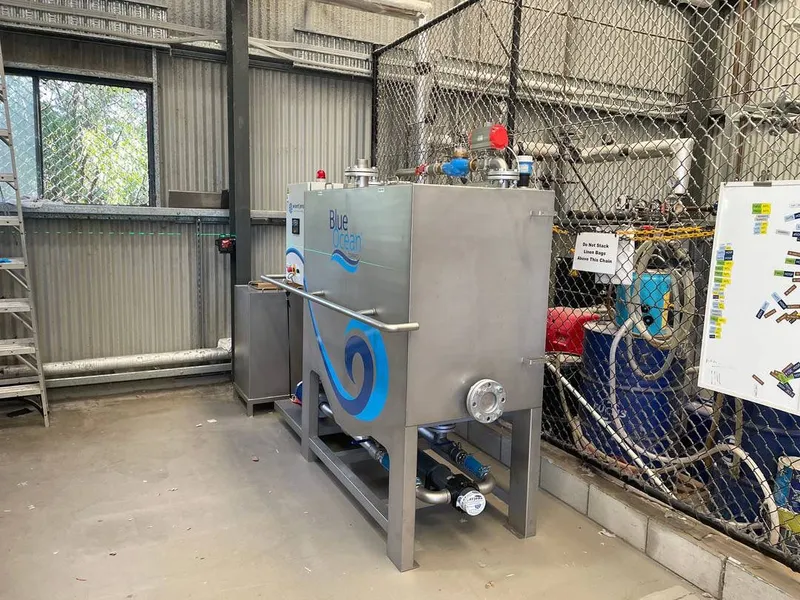
Blue Ocean Compact in Action
This Blue Ocean Compact system was installed by our partner in a working commercial laundry.
Our partner works with Wientjens. We’ll connect you with them to explore a water-recycling setup that fits your plant’s space, workload and existing washers.
Ideal Facility Types
Which Facilities Benefit Most
Explore the options for your textile mix, wash volumes and customer requirements.
Industrial Workwear & Uniform Rental
Manufacturing, construction and service uniforms
For rental laundries washing regular workwear and industrial uniforms. Assess reuse around your garment mix, soil loads, wash chemistry and any protective-garment requirements.
Hospitality Linen Services
Hotel bedding, towels and dining linen
For plants supplying linen to hotels and hospitality venues. Plan reuse around bedding, towel and dining-linen recipes while checking fabric feel, appearance and busy delivery periods.
F&B & Food-Processing Uniforms
Kitchen, catering and food-production garments
For laundries handling kitchen uniforms and food-production workwear. Assess grease, food soils and wash chemicals separately, with trials that meet each customer’s garment and hygiene requirements.
Healthcare Linen Processors
Hospital and aged-care linen
For central plants washing bedding, towels and care linen for healthcare customers. Review each customer’s wash and infection-control requirements with the responsible teams before selecting reuse streams.
Industrial Mat & Mop Services
Reusable floor mats and cleaning mops
Regular mat and mop wash cycles offer a clear pattern for assessing water reuse. Match filtration and solids handling to the dirt, lint and cleaning routines in your laundry.
Multi-Site Laundry Operators
Laundry groups and multiple processing plants
Compare each plant’s workload, utility accounts and equipment before planning reuse across a laundry group. Choose connections and installation schedules suited to each commercial site.
Illustrative Scenario
Singapore Textile Rental Scenario: 55% Water Savings
See how a workwear and uniform rental laundry processing 100 tonnes a week could reduce its water and gas costs. All inputs below are assumed; amounts are in Singapore dollars (SGD), excluding GST.
Example Facility Profile
- Laundry type
- Industrial workwear and uniform rental
- Workload
- 100 tonnes/week × 48 operating weeks/year
- Fresh-water use
- 10 litres per kilogram of laundry
- Variable water and wastewater cost
- SGD 5/kL in combined avoidable charges
- Relevant laundry gas cost
- SGD 100,000/year
- Added running costs
- SGD 18,000/year
The gas baseline covers the laundry use affected by recycling. Added running costs cover electricity, servicing, consumables, testing and solids disposal in this example.
Modelled Annual Savings
The assumed workload uses 48,000 kL of fresh water a year. A 55% reduction saves 26,400 kL × SGD 5/kL = SGD 132,000 in annual water and wastewater costs.
SGD 132,000 water savings + SGD 15,000 gas savings − SGD 18,000 added running costs = SGD 129,000 net savings/year.
This example assumes suitable wash water can be reused and counts only water and wastewater charges that fall with consumption. Fixed charges remain payable. Your savings and payback depend on your plant’s workload, actual bills and installed price.
Find out what your laundry could save
Get a free analysis using your laundry’s figures, or explore the cost and payback guide.
FAQ
Singapore Textile Rental Water Recycling FAQ
How much can textile rental and industrial laundries save?
Water recycling can cut your laundry’s water use by 45–65% and gas use by around 15%. For laundries processing 100 tonnes/week, payback can be as fast as 6 months. Apply these benefits to measured laundry throughput, actual utility charges and the accepted reuse design. Multi-shift utilisation, recoverable flows, installed scope and recurring costs determine the financial model for your plant.
Which industrial wash-water streams should be assessed for reuse?
Map each tunnel-washer zone and washer-extractor recipe, including linen types, soiling, wash chemicals, discharge timing and temperature. Assess workwear, mats, mops, hospitality linen and healthcare textiles separately where their quality or contamination requirements differ. Record accepted collection streams, exclusions and destination wash stages before sizing equipment.
Does filtration remove all workwear contaminants or establish disinfection?
Wientjens’ Blue Ocean Filter brochure identifies fibres, dirt particles, hairs and other suspended solids as filtration targets. That specification does not establish removal of dissolved oils or chemicals, or validated disinfection. Agree appropriate water and textile testing with the operator, chemical supplier and relevant specialists. Include representative heavy-soil loads, colour transfer, odour, residue and any protective-garment requirements in the acceptance trial.
Further reading
How should a multi-shift plant choose filtration and tank capacity?
Use time-based collection and reuse flows, including simultaneous washer dumps, peak filling demand, production changes and idle periods. Ask the provider to confirm the selected model’s throughput, tank capacity, controls, cleaning-water use and compatibility with the existing washers. A weekly tonnage figure alone does not establish the required hourly filtration rate or storage capacity.
Which Singapore requirements should a textile rental plant review?
Confirm the discharge destination with your site team. Trade effluent entering the public sewer requires PUB Written Approval and must meet its conditions. NEA’s watercourse-discharge requirements have a separate scope. Review proposed changes with the relevant authority and follow customer contracts and textile-quality requirements. For healthcare linen, involve the customer’s infection-control team and review MOH guidance for its care setting. Equipment selection alone does not establish approval, process compliance or environmental certification.
How should a textile rental plant calculate net savings and payback?
Calculate how using 45–65% less water and around 15% less gas would affect your laundry’s variable costs. PUB’s water price includes the Water Tariff, Water Conservation Tax and Waterborne Tax; use the charges on your account. Separate fixed fees, pollutant-load charges and non-laundry consumption. Deduct added electricity, servicing, consumables, testing and other recurring costs before dividing the installed quotation by positive net annual savings. Payback can be as fast as 6 months at 100 tonnes/week; assess your plant’s accepted streams and utilisation.
Further reading
What operating and service arrangements should the plant confirm?
Agree water and textile acceptance checks, metering, alarm responses, cleaning, solids handling, staff training and the fresh-water contingency before everyday use. Confirm how the selected design handles isolation and restart. Record the provider’s maintenance responsibilities, service coverage, response arrangements, spare-parts access and warranty terms in the quotation. Use those agreed arrangements to plan around your shifts and linen commitments.

Assess Your Textile Rental Plant’s Recycling Options
Bring your shift schedules, wash streams, utility bills and textile-quality requirements to a free ROI assessment.
Define the process, installed scope, net operating benefit and handover requirements for your site.
Explore commercial laundry water recycling in Singapore
By industry
Service area
Wientjens Technology 🇳🇱
DUTCH ENGINEERING
Explore Wientjens Blue Ocean technology. Review the manufacturer's model specifications when assessing your laundry's water and energy recycling options.