Installation Process in Singapore: Plan Your Laundry Retrofit
Cut your laundry’s water use by 45–65% and gas use by around 15%. Plan the retrofit around your existing washers, available space and production schedule. For laundries processing 100 tonnes/week, payback can be as fast as 6 months.
Singapore installation process
Key facts at a glance
Plan a water recycling retrofit around your existing Singapore laundry. The assessment checks how the selected equipment will connect to your washers, water supply and drainage, and where it can fit.
For hotel, healthcare, textile-rental and industrial laundries, water reuse and heat recovery can reduce operating costs. Use our Singapore laundry cost guide to compare savings against your actual bills and laundry volume.
- Singapore laundries: Commercial laundries in Singapore, including hotels, healthcare facilities, textile-rental plants and industrial sites.
- How we help: LaundryWaterSolutions connects you with our partner, who works with Wientjens, for a free pre-installation assessment and ROI analysis.
- Water and gas: Water recycling can cut laundry water use by 45–65% and gas use by around 15%.
- Payback: For laundries processing 100 tonnes/week, payback can be as fast as 6 months.
- Retrofit planning: Confirm washer compatibility, space, connections, production arrangements and project timing with the provider.
- Singapore requirements: Check the applicable PUB plumbing, metering and sewer-discharge requirements, and agree eligible water streams and receiving wash stages.
What to Expect
Your Installation Journey in Singapore
A clear installation plan helps you manage access, connections and laundry production. Agree the work sequence and any downtime with the provider before booking the project.
Agreed Schedule
Plan delivery, connections and commissioning
Equipment Fit
Check the full layout and service clearances
Production Plan
Agree cutover windows and fresh-water arrangements
Installing in Singapore
Plan Your Singapore Connections and Approvals
Check the supply connections, discharge arrangements and metering requirements during design. The provider and the relevant contractors should confirm which submissions and records your project needs.
Water-service and plumbing work
Use PUB-licensed plumbers for regulated water-service and sanitary plumbing work. The water-service worker confirms the relevant SS 636 requirements, submissions and water-service completion certificate. That certificate covers the water-service work; laundry-process acceptance is agreed separately.
Metering and your WEMP
For qualifying large users with net water consumption of at least 60,000 m³ in the previous year, PUB’s mandatory water-efficiency requirements include private key-use meters and an annual Water Efficiency Management Plan for at least three consecutive years. Agree meter locations and reporting responsibilities during design.
Reuse and discharge planning
Agree the water streams and wash stages suitable for reuse, and the measures protecting the fresh-water supply. PUB Written Approval covers trade effluent discharged to public sewers; check whether the retrofit requires an updated approval. NEA’s watercourse rules apply to a different discharge route.
Step by Step
Installation Stages for Your Laundry
Use these stages to plan the project. Equipment delivery, site works, approvals and connection windows determine your actual schedule.
Assessment & Planning
Activities:
- Inspect the plant room and connection points
- Measure the washers and the room available
- Agree the required reuse and discharge tests
- Match recoverable water to your wash schedule
- Plan metering and agree the project schedule
Your Role:
- Give the provider’s assessor access to the wash floor
- Share your shift pattern and busy periods
- Review the proposed layout and connection plan
- Agree connection windows and production arrangements
Visit Timing: Agree the site visit with the provider
Preparation & Pre-Works
Activities:
- Confirm the selected equipment and delivery access
- Prepare the electrical supply specified in the design
- Prepare the agreed water and drainage connections
- Check floor loads, mountings and service clearances
- Confirm building permissions and required submissions
Your Role:
- Keep the install area free for the crew
- Liaise with building management on access
- Plan laundry production around the agreed works
Connection Plan: Agree downtime and temporary water arrangements
System Installation & Commissioning
Equipment Positioning
- Position the selected equipment and confirm access
- Install the filtration and storage specified in the design
- Fit the selected controls and sensors
- Install mountings for the agreed layout
Water & Drainage Connections
- Connect the agreed collection streams
- Install the collection pipework for those streams
- Connect reuse water to the agreed wash stages
- Connect filtered discharge and fresh water if Blue Ocean HEX is specified
- Fit AquaDrain discharge-water filtration where specified
- Test the pipework and fresh-water protection measures
Electrical & Controls
- Bring power to the unit
- Wire the pumps, valves and sensors
- Configure and test the selected controls
- Check the required washer signals and interfaces
- Fit the specified operator displays
- Configure the agreed meter records and reports
Testing & Commissioning
- Fill, prime and clear air from the circuit
- Run all pumps and valves through their cycle
- Check the selected sensors and alarm settings
- Trial the agreed reuse stages with representative laundry loads
- Compare water and linen checks against the acceptance criteria
- Set reuse flows to match wash demand
- Record commissioning readings against the pre-installation baseline
Connection Scheduling: Agree work windows, any downtime, fresh-water fallback and restart checks with the provider and your laundry team.
Training & Handover
Activities:
- Train staff on the selected equipment and agreed tasks
- Walk the team through daily running
- Outline the maintenance the unit needs
- Cover everyday fault-finding
- Agree readings, reporting and alert responsibilities
- Hand over manuals, service contacts and project records
What You'll Learn:
- Powering the system on and off
- Interpreting the control display
- Inspecting and maintaining the filtration equipment
- Recognising when to call support
- Completing the agreed water and linen checks
- Keeping to the service intervals
Support Arrangements: Agree monitoring, service availability and written warranty terms before handover
Space Planning
Match the Equipment to Your Available Space
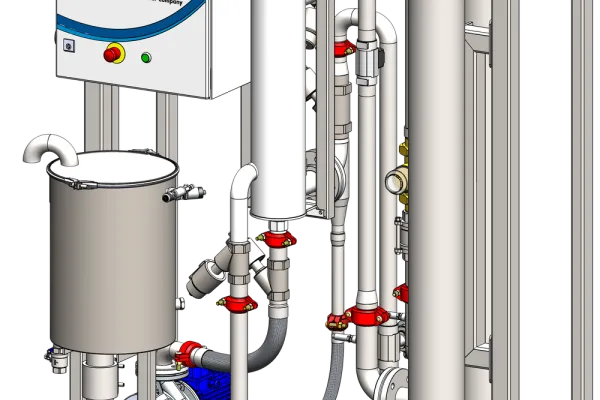
Allow space for the selected equipment, storage, pipework and safe service access. Confirm the full installed layout and electrical supply from the current model drawings and your site assessment.
Blue Ocean System
Automatic process-water filtration for washer-extractors and tunnel washers. See Wientjens Blue Ocean.
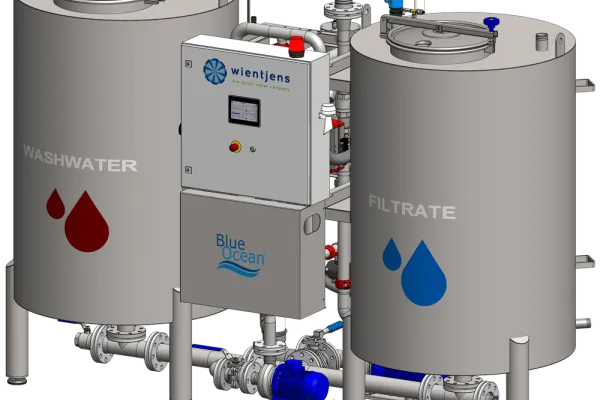
Source: Wientjens Blue Ocean Filter brochure. Confirm the selected model and duty during assessment.
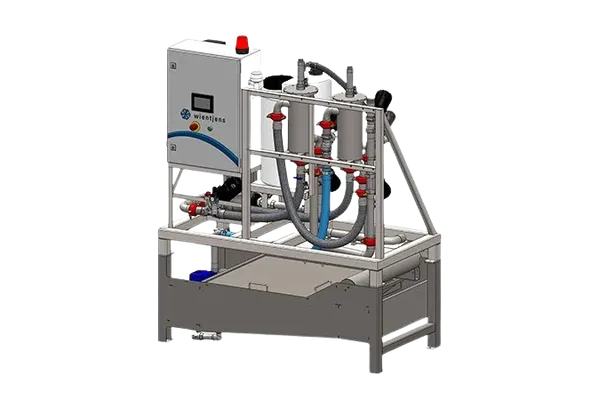
AquaMiser System
Process-water recycling for tunnel washers with a stable workflow. See Wientjens AquaMiser.
AquaBatch 3 System
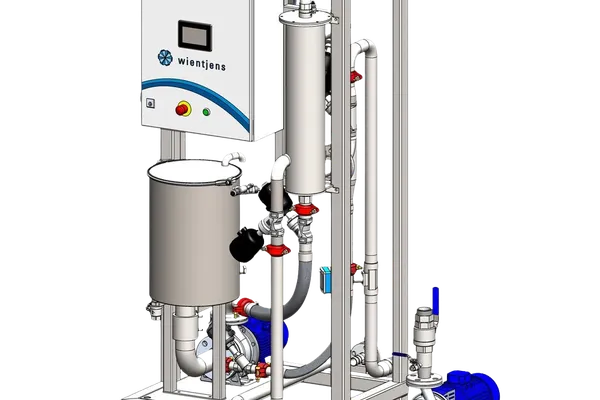
Inline filtration for tunnel washers. See Wientjens AquaBatch 3.
Blue Ocean HEX (Optional Add-on)
Transfers heat from filtered discharge water to fresh wash water. See Wientjens Blue Ocean HEX.

Not Sure Which System Fits Your Space?
Request a free assessment to check equipment fit, the available space and the connections your laundry needs.
Site Visit
Pre-Installation Assessment Checklist
The assessment reviews usage, the building, your machines and the proposed water streams. Share current site drawings, washer details, production records and utility bills so the provider can prepare the right scope.
Operational Details
- Current daily/weekly laundry volume (kg)
- Number and types of washing machines
- Operating hours and schedule
- Linen types processed (medical, hospitality, etc.)
- Water, gas and electricity bills and consumption (SGD)
Facility Infrastructure
- Available floor space for equipment
- Ceiling height and overhead clearances
- Floor load capacity and drainage
- Electrical supply availability
- Plumbing connections and proximity
Equipment Details
- Washing machine make and model
- Machine control systems (PLC compatibility)
- Existing plumbing configuration
- Water heating systems (gas/electric)
- Drainage and trade waste setup
Reuse Water & Discharge Checks
- Incoming and reused-water acceptance criteria
- Testing needed for the proposed reuse and discharge
- PUB sewer-discharge approval and conditions
- Water-service connections and backflow protection
- Linen acceptance and wash-chemistry checks
Use the Singapore recycling-process guide to plan collection and reuse stages, and our Singapore water regulations guide to prepare for the applicable supply, metering and discharge checks.
Compatibility
Assess Your Existing Washer Connections
Water recycling can be fitted around existing laundry equipment. The assessment checks the selected model against your washer inlets, drains, controls and wash programme.
Partner Installation
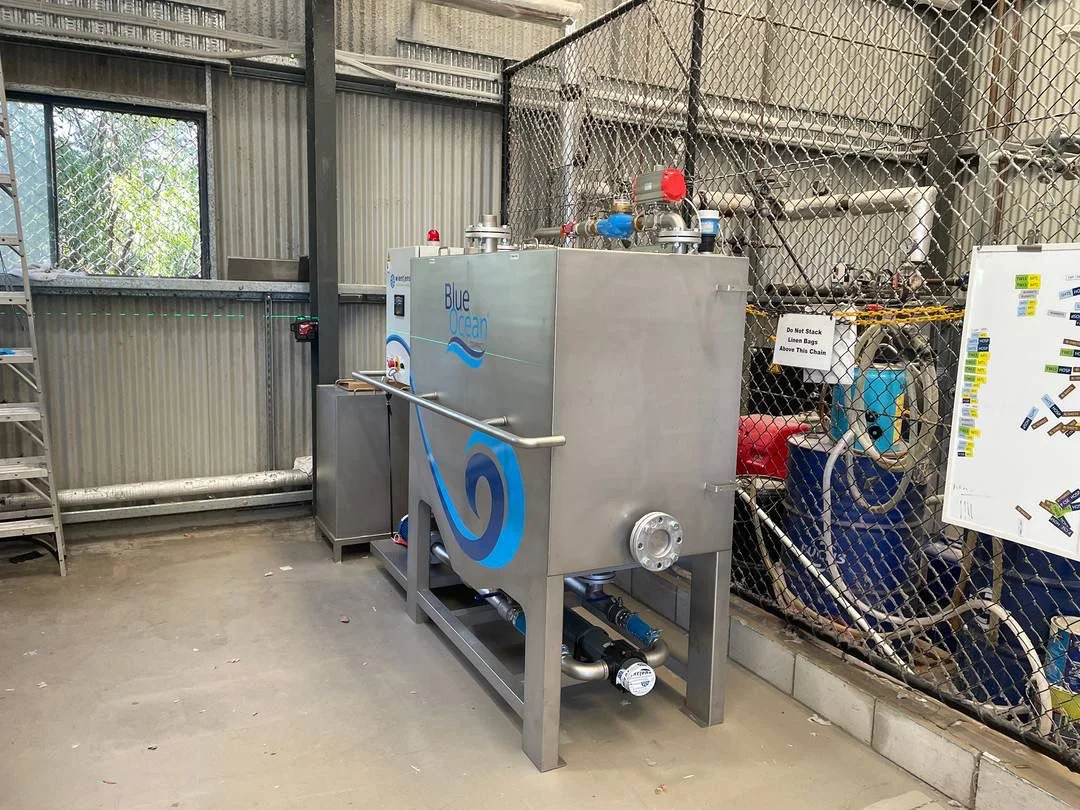
Blue Ocean Compact in Action
Blue Ocean Compact installed by our partner in a commercial laundry. Your assessment will confirm the equipment, space and connections suitable for your site.
Washer Extractors
Check each make and model’s reuse inlets, drainage and controls
Tunnel Washers
Check collection points and compartment interfaces for the selected equipment
Control Systems
Confirm the signals, valves and controls needed for the proposed connection
How Integration Works
For a Blue Ocean system, the design identifies which water can be collected and where it will return. These five steps describe the proposed process:
- 01 Collect: Take suitable process water from the agreed streams
- 02 Filter: Self-cleaning filtration removes suspended lint, fibres and solids
- 03 Store: Insulated buffering retains heat in filtered water until reuse
- 04 Reuse: Return water to the agreed wash stages and confirm fresh-water needs
- 05 Monitor: Track equipment performance, alerts and maintenance reminders, with agreed staff checks
See Wientjens’ Blue Ocean product information for the equipment function and buffering options. Agree reuse-water and linen acceptance with your laundry team.
Ongoing Support
Agree Ongoing Support
Confirm the maintenance plan, monitoring options and service arrangements with the provider before handover. Agree who responds to alarms and how savings will be tracked.
Monitoring & Reporting
Agree the meter records, dashboard access, alerts and reporting you need
Service Arrangements
Confirm provider contacts, on-site availability and the scope of ongoing support
Written Warranty Terms
Obtain the provider’s warranty period, inclusions, exclusions and responsibilities in writing
FAQs
Common Installation Questions
Confirm these questions with the provider before agreeing your project.
Will installation disrupt my operations?
Agree the installation sequence and any downtime before work begins:
- Off-peak work: Ask which connections can be scheduled outside busy periods
- Weekend access: Confirm building access, contractor availability and laundry demand
- Phased changeover: Check whether some machines can remain available during the works
- Fresh-water fallback: Agree and test the isolation and fresh-water arrangements in the design
Actual disruption depends on your connections, equipment and production schedule. Confirm the plan with the provider and your laundry team.
How long does installation actually take?
The schedule depends on the selected equipment and the works your site needs:
- Assessment and design: Confirm washer fit, the layout, approvals and the quoted scope
- Delivery and installation: Agree equipment lead times, access, site preparation and connection windows
- Commissioning and handover: Allow for agreed testing, staff training and project records
Ask the provider for a site-specific programme covering these stages and any planned downtime. There is no single installation duration for every model or laundry.
What if I don't have enough space?
Share your plant-room drawings and access details so the provider can check the full installed layout:
- Equipment choice: Match the model to your washer type, water flows and available space
- Service clearance: Allow room for safe operation, cleaning and maintenance
- Outdoor location: Check whether the selected equipment is suitable for the proposed conditions
- Building fit: Check delivery access, floor loads, drainage, ventilation and power
- Storage position: Agree tank locations and pipe routes where buffering is needed
The assessment confirms a workable layout before equipment is selected. A catalogue footprint alone does not show the total space your project needs.
Can you work with my existing washing machines?
A retrofit may allow you to keep your existing washers. The provider checks each make and model’s inlets, drainage, controls and wash programme against the selected recycling equipment. Blue Ocean can serve washer-extractors and tunnel washers; AquaMiser and AquaBatch 3 are designed for tunnel-washer applications.
Manufacturer information: Blue Ocean, AquaMiser and AquaBatch 3.
What's included in the installation cost?
Ask for an itemised quotation confirming which of these are included:
- Equipment: The selected filtration, storage, pumps and controls
- Labour: Plumbing, electrical and installation work for the agreed scope
- Materials: Pipework, valves, cabling and fittings
- Integration: The specified connections to your washers and services
- Commissioning: Agreed tests, settings, meter readings and acceptance checks
- Training: Operator and maintenance instruction for the selected system
- Documentation: Manuals, drawings, service details, written warranty terms and any required water-service completion records
Confirm separately the cost of supply upgrades, building works, submissions and any applicable fees. PUB’s completion certificate relates to the relevant water-service work; it is not a universal certificate approving the recycling equipment or laundry process.
Source: PUB water-service procedures.
What happens if something goes wrong during installation?
Agree fault and restart arrangements before the installation begins:
- Fresh-water fallback: Confirm which machines can use fresh water and how the recycling circuit is safely isolated
- Project contact: Agree who provides updates and who to contact if work affects production
- Restart checks: Confirm the tests and laundry arrangements required before returning to normal operation
Ask the provider to put service responsibilities and warranty terms in writing. Production availability during the works depends on the agreed design and connection plan.
How much training do my staff need?
Agree training for the selected equipment and the people who will use it:
- Operators: Start-up, shutdown, controls, alarms, fresh-water fallback and the agreed daily checks
- Maintenance staff: Cleaning, inspections, service intervals and when to contact the provider
Confirm the session length, training materials and follow-up support in the quotation. Automatic controls still require staff to carry out the agreed operating and maintenance tasks.
Free Assessment
Ready to Get Started?
Request a free pre-installation assessment for your Singapore laundry. Share your site layout, washer details, laundry volume and utility bills to plan the retrofit and compare project costs.
Explore commercial laundry water recycling in Singapore
Service area
Wientjens Technology 🇳🇱
DUTCH ENGINEERING
Explore Wientjens Blue Ocean technology. Review the manufacturer's model specifications when assessing your laundry's water and energy recycling options.